
There’s something satisfying about a well-chosen piece of branded swag. Done right, it tells your audience exactly who you are before you say a word. Done wrong, it ends up in a drawer by Tuesday. The difference? Strategy.
Most companies skip straight to browsing product catalogs. That’s a mistake. The best swag programs start with a clear question: What are we actually trying to accomplish?
CONTENTS TABLE
- What Is Company Swag?
- Start With Strategy, Not Products
- Tier 1: Everyday, Low-Cost Swag
- Tier 2: Mid-Range Swag People Actually Use
- Tier 3: Premium Gifts for VIPs & Clients
- Aligning Swag With Your Brand Personality
- How to Avoid Common Swag Mistakes
- Building a Simple Swag Plan for the Year
“A brand is much more than a product you buy. Brands are as relevant to businesses as to services, and they can be applied to ideas and concepts as well as to products (…).” [1]
Catharine Slade-Brooking, Creating a Brand Identity, 2016.

What Is Company Swag?
Company swag is branded merchandise, physical items featuring your logo, colors, or brand identity, that businesses give to employees, customers, clients, or event attendees. Common examples include branded tote bags, custom mugs, logo T-shirts, and engraved pens.
Swag serves a practical marketing purpose: it keeps your brand visible in daily life. Unlike a digital ad that disappears after a scroll, a quality branded tumbler sits on someone’s desk for years.
How Swag Differs From Generic Promotional Products
Generic promotional products are chosen for price and availability. Company swag ideas, when done well, are chosen for fit. These items reflect your brand personality, appeal to a specific audience, and serve a clear business goal. That distinction is what separates forgettable freebies from items people actually keep and use.
Why Swag Works When It’s Brand-Aligned
People associate the quality of your swag with the quality of your brand. A cheap pen with a smudged logo says something. So does a well-made tote with a clean, minimal design. Every item you put your name on is a handshake with someone new, so it pays to make it count.
Start With Strategy, Not Products
Before you pick a single item, you need a direction. Swag decisions are always easier once you’ve defined the why.
- Are you building brand awareness?
- Rewarding loyal customers?
- Trying to generate referrals?
Each goal points to different products, quantities, and distribution strategies.
Define Your Goal: Awareness, Loyalty, Referrals, or Revenue?
Awareness swag gets your name in front of new people. It’s high volume, lower cost, and built for wide reach. Think trade show giveaways or street team distributions.
Loyalty swag rewards people who already know you.
- It’s more personal, higher quality, and says, We value you.
- A long-time customer receiving a thoughtful gift is far more likely to stick around and talk about you.
- Referral swag is built to travel.
- It should be something people actually use publicly, like a tote bag or a water bottle, because every time someone uses it, you get free exposure.
- Revenue-tied swag shows up in subscription boxes, limited merch drops, or as product upsells. Here, quality matters even more.
Map Your Audience & Context (Events, Mailers, Gifts)
Who’s receiving your swag matters as much as what you’re giving. A 22-year-old at a music festival has completely different tastes than a CFO opening a client gift.
Think about the moment of delivery, too.
- Are items being handed out at a crowded event?
- Mailed to a client list?
- Packed into a new employee welcome kit?
Each context changes what good swag looks like.
For events, portability and practicality win. Items that are too heavy, too delicate, or too large get left behind. For mailers, presentation matters; your packaging is part of the experience. For gifts, personalization lifts the whole thing above generic.
Try LogoMaker to perfect your design before it goes on branded merch. A sharp, scalable logo transforms everything from mugs to T-shirts into a professional statement.
How to Choose a Signature Swag Item for Your Brand
Instead of building a catalog of 15 products, start with a single item. A signature swag item is the piece your brand becomes known for, the thing people recognize as yours. It should be practical, align with your brand personality, and work across multiple contexts.
A design agency might choose a premium notebook. A wellness brand might go with a branded water bottle. A tech startup might pick a minimal desk accessory. Once you’ve found your signature item, build on it.
Tier 1: Everyday, Low-Cost Swag
Not every situation calls for a premium gift. Sometimes you need 500 items that look great and cost under a dollar each. That’s what Tier 1 is for.
Low-cost swag gets a bad reputation because it’s often lazily done. Cheap doesn’t have to mean forgettable. With strong branding and smart choices, these items can carry real weight.
Pens, Notepads, Stickers, Buttons & Basic Office Supplies
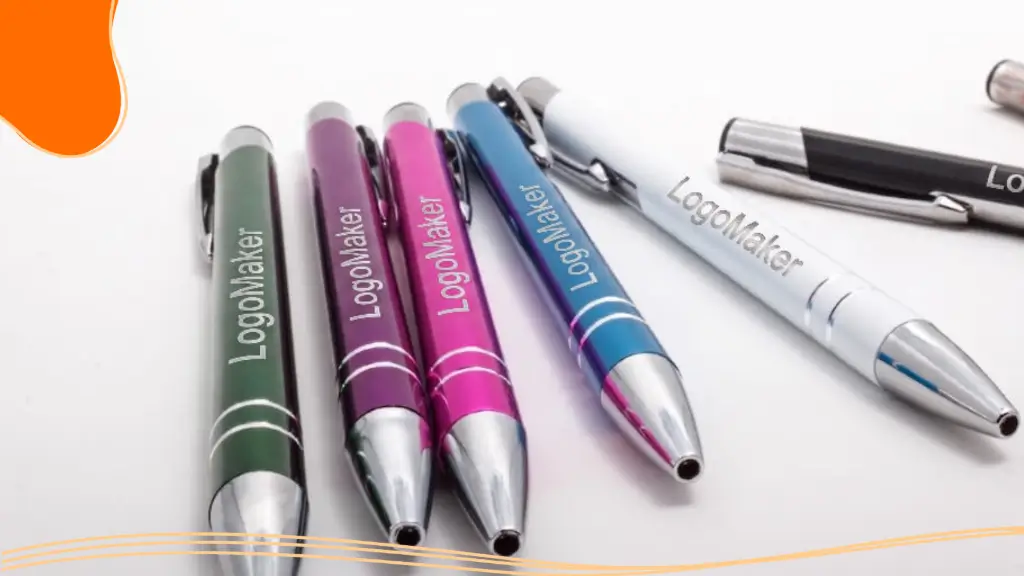
Pens are the old reliable brand of branded swag. They get passed around, lost, found again, and used by people who’ve never heard of your brand. That’s actually the point.
- Stickers have had a major resurgence, especially with younger audiences. A well-designed sticker ends up on laptops, water bottles, and phone cases.
- Notepads and sticky notes have staying power. They sit on desks for months. Every time someone grabs one, they see your logo.
- Buttons and pins are low-cost and highly collectible, especially at conventions or brand activations.
When These Work (Mass Events, Conferences, Street Teams)
Tier 1 swag shines when your goal is volume. A trade show booth, a college fair, a product launch event; these are moments where you’re meeting hundreds or thousands of people.
The math is simple: You can’t give everyone a $40 hoodie. But you can give everyone a pen, a sticker, or a branded notepad.
- Street team campaigns work especially well with these items. A team handing out branded pens near a busy event is a classic awareness move that still works in 2026.
How to Keep Them On-Brand Without Overcomplicating Design
The biggest Tier 1 mistake is cramming too much onto a small item. A pen has maybe an inch of printable space. A logo and a URL; that’s your budget. Use it wisely.
Your logo needs to work at small sizes. If yours doesn’t, this is a good moment to revisit it. Tools like LogoMaker can help you create a clean, scalable mark that holds up on even the smallest surface.
- Stick to two colors max for small items.
- More than that, and the design starts fighting itself.
- When in doubt, go simpler.
Tier 2: Mid-Range Swag People Actually Use
Here’s where swag starts to get genuinely useful. These are the items people keep on their desks, carry to the gym, and wear on weekends. Done well, they become part of someone’s daily life.
Mid-range swag falls in the $10 to $40 per item range. It’s appropriate for a broader audience than premium gifts, but it’s personal enough to feel intentional.
Tote Bags, Mugs, Tumblers, T-Shirts, Mousepads, Notebooks
Tote bags have become an unofficial currency of brand loyalty. People collect, trade, and use them. A well-made tote with a strong design is something people keep for years.
- Insulated tumblers and travel mugs hit hard in 2024 and haven’t slowed down. The Stanley craze proved something marketers have known for years: People will carry a branded cup every single day if it’s good enough.
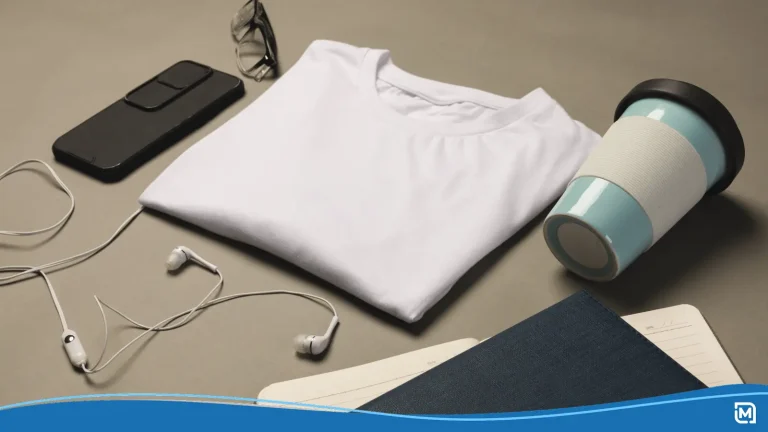
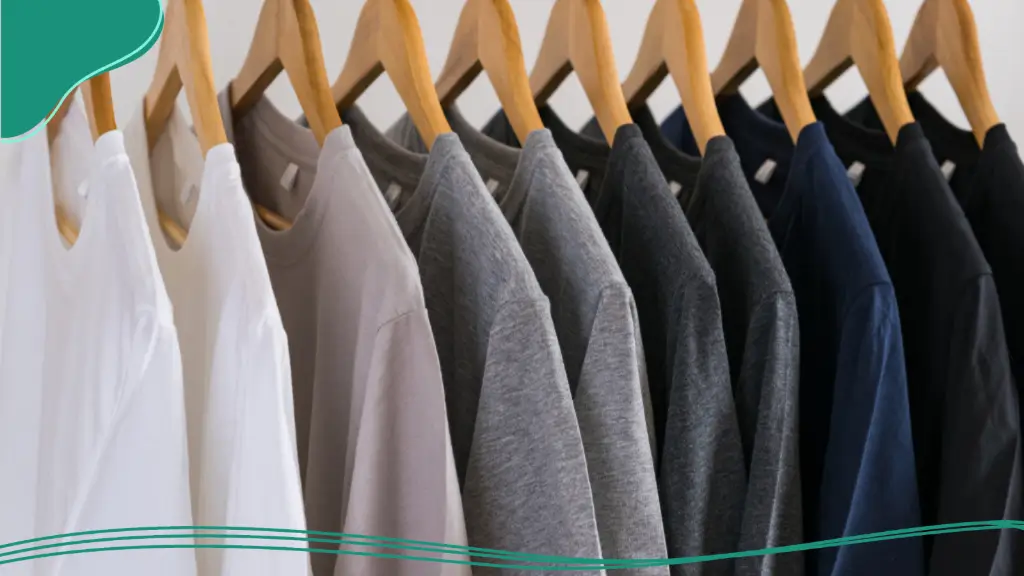
- T-shirts are tricky. The print quality, fabric weight, and fit have to be right. A cheap shirt with a great logo is still a cheap shirt, and no one wears it.
- Mousepads and branded notebooks are workhorses. They stay on desks, they’re used daily, and they display your brand in a professional setting without being loud about it.
Ideas for Employees vs. Customers vs. Partners
Your team, your customers, and your partners have different relationships with your brand. The swag you give each group should reflect that.
- For employees, welcome kits are a huge opportunity. A first-day package that includes a quality shirt, a notebook, a good pen, and maybe a sticker pack tells new hires this company pays attention to details.
- For customers, think of utility and delight. What would genuinely make their day easier or more enjoyable? A quality tote, a good mug, or a practical notebook will fit most audiences.
- For partners and collaborators, consider co-branded options where it makes sense. A shared tumbler or notebook that acknowledges the partnership feels collaborative rather than one-sided.
“As competition creates infinite choices, companies look for ways to connect emotionally with customers, create loyalty, and make themselves irreplaceable. A strong brand stands out in a densely crowded marketplace. People trust brands, identify with them, and believe in their superiority. How a brand is perceived affects its success — whether it’s a start-up, a nonprofit, or a product.” [2]
Alina Wheeler & Rob Meyerson, Designing Brand Identity, 2024.
Designing Evergreen Swag vs. Campaign-Specific Swag
Not all swag has the same shelf life, and that’s fine. But you should know which kind you’re making before you place the order.
- Evergreen swag is timeless. It features your core logo, maybe your tagline, and nothing that dates it. This is what goes in your welcome kits and standard giveaway rotation year after year.
- Campaign-specific swag has a moment. It might reference a product launch, a company milestone, or a seasonal theme. It’s built for excitement, not longevity. Just make sure you’re ordering quantities that match the campaign window.
LogoMaker provides your logo in a range of formats, so embroidery, engraving, and promo suppliers can work with the exact files they need.

Tier 3: Premium Gifts for VIPs & Clients
At the top of the swag tier system, you’ve got items that feel luxurious. These aren’t giveaways; they’re gifts. The intentions behind them differ, and so does the experience of receiving them.
Premium swag is where the relationship between your brand and your recipient deepens. These are the items people remember, photograph, and talk about.
Bundled Gift Sets, Higher-End Drinkware, Apparel, Desk Items
A well-curated gift set does something a single item can’t: it tells a story. A box containing a quality tumbler, a leather-bound notebook, and a premium pen says: “We put some thought into this.”
- Higher-end drinkware has become very popular. Brands like Yeti, Stanley, and Corkcicle have raised the bar for what people expect from a branded cup. If you’re going premium, go with quality blanks that people already recognize as good products.
- Apparel at the premium tier means quality fabrics and thoughtful fits. A Patagonia vest or a heavyweight full-zip doesn’t feel like free stuff; they feel like a real gift. People wear them proudly.
- Desk items, such as a wireless charger, a high-quality mousepad, or a nice desk organizer, offer daily brand exposure in a professional setting. These are the gifts that sit on someone’s desk for years.
Personalized vs. Just Branded
There’s a real difference between a gift with your logo and one that feels personal.
- Adding someone’s name to a journal, monogramming a bag, or including a handwritten note transforms a branded item into something meaningful. It shows you see the person, not just the relationship.
That said, personalization isn’t always scalable. For large partner lists, thoughtful packaging and quality products can go a long way without requiring individual customization.
Timing: Onboarding, Milestones, Holidays
Timing a gift well is half the battle. A premium welcome kit during onboarding sets a tone for the whole relationship. A milestone gift at year one or year five tells someone you’ve been paying attention.
- Holiday gifting is crowded. Everyone sends something in December, which means your gift has to work harder to stand out.
- Consider shifting to a less expected moment such as a client’s company anniversary, a project completion, or a quarterly check-in.
Aligning Swag With Your Brand Personality
Your swag is a physical extension of your brand. If your brand voice is sharp and minimal, a neon-colored fidget spinner doesn’t fit. If your brand is playful and irreverent, a stiff corporate pen set sends the wrong signal.
This alignment isn’t about rigidity; it’s about consistency. Every touchpoint, including physical ones, should feel like it came from the same place.
Fun & Playful vs. Minimal & Professional
Playful brands can go bold with color, quirky shapes, and unexpected items. Think enamel pins, fun socks, branded card games, or a custom stress ball shaped like your mascot.
- Minimal and professional brands should lean into clean design: muted palettes and high-quality materials. A sleek black notebook with a subtle embossed logo feels more on–brand than a rainbow stress ball.
Neither approach is better; they just need to match your actual brand identity. The swag that works is the swag that feels like you.
Eco-Friendly & Sustainable Options
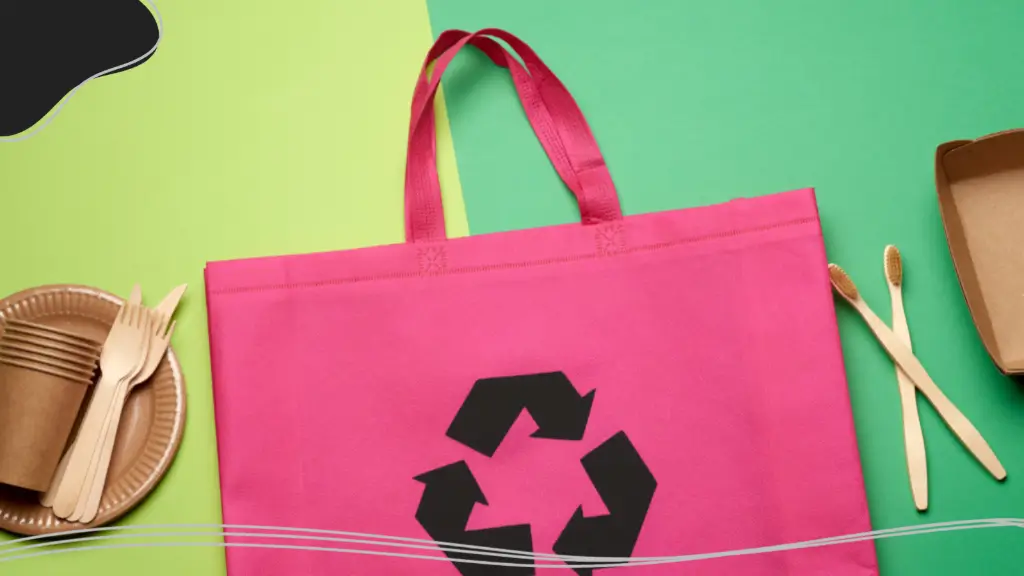
Sustainability isn’t a trend; it’s an increasing expectation, especially among younger audiences and mission-driven organizations. If your brand has any environmental commitment, your swag should reflect it.
Options include:
- Recycled material totes.
- Seed paper notepads that grow when planted.
- Bamboo pens.
- Organic cotton shirts.
- Stainless steel drinkware (which avoids single-use plastic entirely).
Even your packaging choices matter. Minimal packaging, recycled materials, and avoiding excess wrapping are signals your audience will notice.
Swag Ideas for Service Businesses vs. Product Brands
- Service businesses often struggle with swag because their product isn’t tangible. That’s actually an opportunity. Your swag can express a feeling your service creates, reliability, clarity, confidence, or care.
- Product brands have it a bit easier because swag can extend the product world. A skincare brand giving away a branded cosmetics bag or a sample kit feels cohesive. A software company giving away a clean, minimal notebook and a good pen says: “We help you do focused work.”

How to Avoid Common Swag Mistakes
Even well-intentioned swag programs make avoidable mistakes. Some are expensive. Some are just embarrassing. Here’s what to watch for.
Picking Trendy but Impractical Items
Fidget spinners. Light-up selfie rings. Desktop Zen gardens. Every year, there’s a product that briefly feels like a great giveaway idea before it ends up in the trash by the end of the event.
Trend-chasing in swag is risky because trends move faster than production timelines. By the time your order ships, the moment may have passed.
The safer bet is practical over trendy. Items people actually use, like a good pen, a quality tote, or a useful tech accessory, age better than gimmicks.
Overbranding Everything (Logo Overload)
There’s a fine line between branded swag and a walking advertisement. When your logo appears four times on a single item in three different sizes, it stops feeling like a gift and starts feeling like promotional material.
The best branded items are the ones people want to use in public. That means the branding needs to feel considered, not desperate. A small logo in a tasteful location is often more powerful than a giant one.
- Less is more.
Trust your design to do the work without overwhelming the item.
Ignoring Shipping, Storage & Sizes
Ordering 500 custom hoodies sounds great until you realize you don’t have a place to store them, your size distribution was wrong, and the shipping costs have eaten your budget.
Logistics are as important as design. Before placing a large order, think through:
- Where items will be stored.
- How they’ll be shipped or distributed.
- What happens to leftover inventory?
For apparel, always order a range of sizes and skew toward larger sizes. A size medium that doesn’t fit is just a waste. Offering XS through 3XL shows you’ve thought about your audience.

Building a Simple Swag Plan for the Year
Swag works better as a program than as a series of one-off decisions. A yearly plan helps you stay ahead of ordering timelines, budget more accurately, and make sure your swag moments actually connect to your business goals.
Key Moments to Plan for (Events, Launches, Holidays)
Start with your calendar. Mark every event you’re attending or hosting, every product or campaign launch, and every natural gifting moment like the holidays.
Then work backward. Most quality swag has a two-to-four week production lead time. Premium items or large orders can take longer. If you’re planning holiday gifts, starting in October is not too early.
LogoMaker is a reliable partner when you are locking in your brand look before ordering swag, helping you polish your logo design and prep the right files before anything goes to print.
Key moments worth planning around:
- Q1: New year, new team members, trade show season kick-off.
- Q2: Spring events, customer appreciation week, product launches.
- Q3: Summer campaigns, back-to-school activations, mid-year reviews.
- Q4: Holiday gifting, year-end recognition, conference season.
How to Know If Your Swag Is Working
Swag isn’t always easy to measure, but there are signals worth tracking.
- For event swag, note how quickly items ran out and whether you saw any social media pick-up.
- For employee kits, pay attention to whether people use the items at their desks or wear branded apparel outside of work.
- For client gifts, follow up. A thank-you note or a mention in a call tells you the gift landed.
Over time, patterns emerge. The items that get used, photographed, and mentioned are the ones worth repeating. The ones that don’t are the ones to cut, regardless of how good the unit price was.
Swag Checklist & Budget Template
A simple swag plan doesn’t have to be complicated. Here’s a starting checklist:
Before you order:
- Define the goal (awareness, loyalty, gift, referral).
- Identify the audience and quantity needed.
- Set a per-item budget including shipping and storage.
- Confirm your logo files are print-ready (ideally vector format).
- Choose items that match your brand personality.
- Check production and delivery timelines.
Design considerations:
- Limit colors for small or complex items.
- Use a clean, scalable version of your logo.
- Avoid cluttering the design with too much text.
- Test the design at actual print size before ordering.
Logistics:
- Plan storage before items arrive.
- Build in buffer time for delays.
- Order a variety of sizes for apparel.
- Track what works and what doesn’t for next year.
A rough budget template to get you started:
| Tier | Per-Item Budget | Best For |
|---|---|---|
| Tier 1 | Under $5 | Events, conferences, mass giveaways. |
| Tier 2 | $10 to $40 | Employees, customers, mid-tier clients. |
| Tier 3 | $40 and above | VIP clients, partners, key hires. |
The goal isn’t to spend as much as possible; it’s to spend the right amount on the right item for the right person at the right time. When those four things line up, swag stops being a cost and starts being an investment.
Getting company swag right takes:
- A little planning.
- A clear sense of your brand.
- An honest look at who you’re trying to reach.
The above is not complicated, but it does require intention.
Start with strategy. Build up from there. And make sure your logo is doing the heavy lifting it needs to do; every item you put your name on is a handshake with someone new.
Ready to lock in your brand look before that swag order? LogoMaker is an ideal place to design your logo and prep production-ready files, especially when you tap into our AI-Powered logo aker.
FREQUENTLY ASKED QUESTIONS
What Is the Best Swag to Give Employees?
The best employee swag is practical, good quality, and personal enough to feel intentional. Welcome kits work particularly well. A combination of a quality shirt, a notebook, a good pen, and a branded mug or tumbler tells new hires that the company pays attention to details. Items people use daily, at their desks or on the go, deliver the most lasting brand exposure.
How Much Should You Budget for Company Swag?
Your budget depends on your goal and audience. A general starting framework:
- Under $5 per item for mass event giveaways.
- $10 to $40 for employees and customers.
- $40 or more for VIP clients and key partners.
Always include shipping, storage, and packaging costs in your per-item calculation. They add up quickly on large orders.
When Should You Order Swag Before an Event?
Most branded swag requires two to four weeks of production time. Premium items, large orders, or anything requiring embroidery or engraving can take longer. A safe rule: Place your order at least four to six weeks before your event to allow for production, shipping, and any corrections needed.
What Are the Best Promotional Items for Brand Awareness?
The best promotional items for brand awareness are those that people use in public. Tote bags, water bottles, stickers, and quality pens consistently rank among the highest-visibility, highest-retention items. The key is choosing something practical enough that people actually use, and well-designed enough that they want to.
References
- Slade-Brooking, C. 2016. Creating a Brand Identity: A Guide for Designers (Graphic Design Books, Logo Design, Marketing). First Edition. London: Laurence King Publishing.
- Wheeler, A & Meyerson, R. 2024. Designing Brand Identity: A Comprehensive Guide to the World of Brands and Branding. 6th Edition. Hoboken, New Jersey: John Wiley & Sons.