

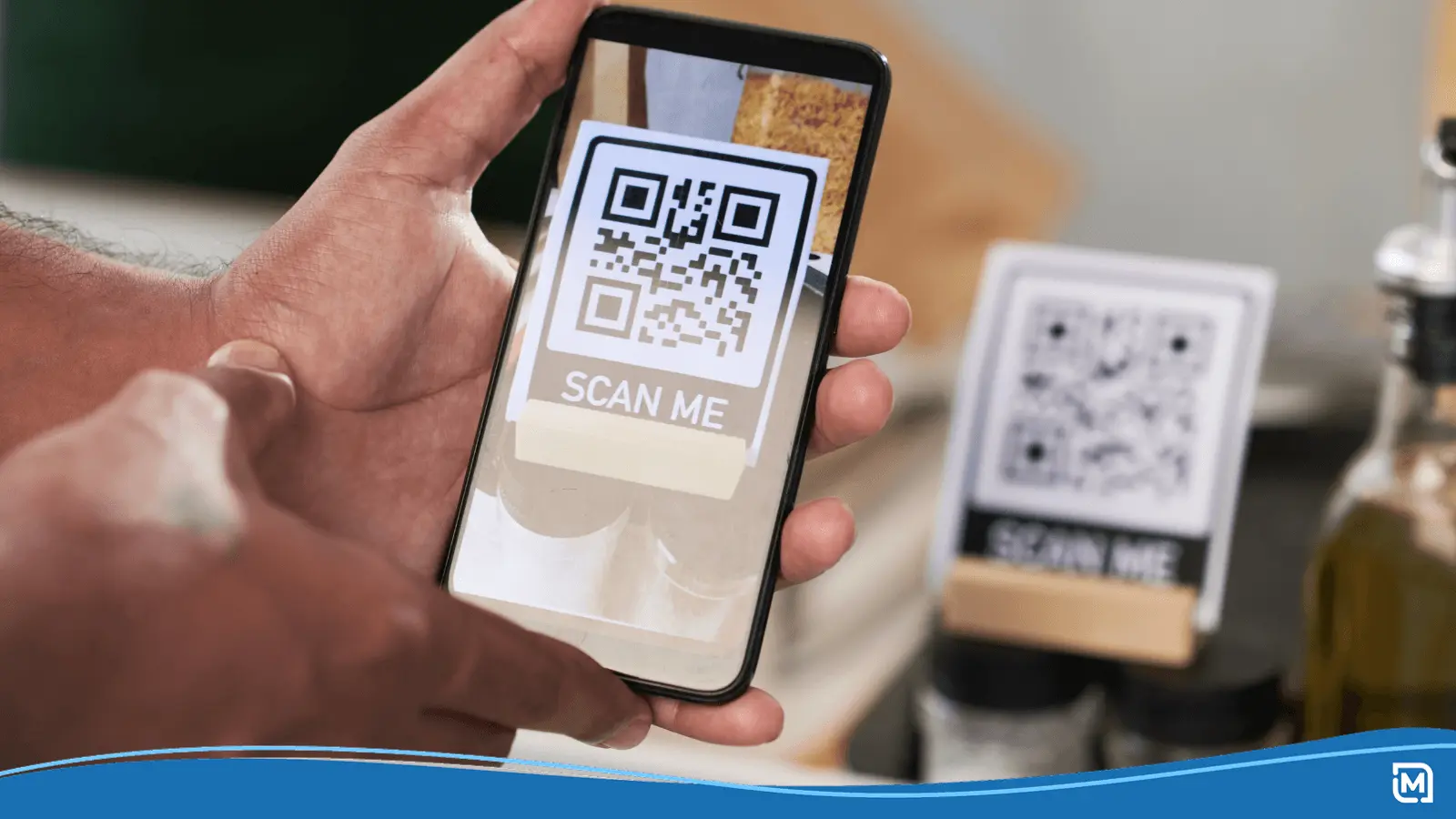
A business card with a QR code connects your printed card to digital information, letting people access your contact details, portfolio, booking page, or special offers with a quick scan. Instead of typing in a URL or searching for your business later, potential customers can go straight to the information they need.
The best QR code business cards pair a clear purpose with a simple, easy-to-scan design. You can use yours to share your work, collect customer reviews, book appointments, or encourage people to follow your brand.
In this guide, you’ll find 12 business card ideas with QR codes, along with practical tips for choosing the right link, designing your code, and making sure it scans reliably.
- What Should You Link to From a Business Card QR Code?
- 12 Business Card Ideas With QR Codes
- QR Code Design Tips for Business Cards
- Static vs. Dynamic QR Codes: Which Should You Choose?
- How to Create a QR Code for a Business Card
- Common Mistakes That Can Stop QR Codes From Scanning
- Make Your Business Card Work Beyond the First Meeting

QR Code Business Card Quick Answers
- Best link: one clear destination, such as a contact card, booking page, portfolio, or review page.
- Size: start around 1 × 1 inch (2.5 × 2.5 cm) and test a printed proof.
- Quiet zone: leave at least four modules of blank space on every side.
- Colors: dark code on a light background.
- Placement: usually the back of the card, with a short call to action such as Scan to book.
What Should You Link to From a Business Card QR Code?
Before exploring different business card ideas with QR code integrations, decide what you want someone to do after scanning yours.
A QR code works best when it has one clear purpose. Consider linking to:
- Your digital contact card: Make it easy for new connections to save your details.
- A booking page: Let potential clients schedule an appointment or consultation.
- Your portfolio: Show examples of your work without squeezing everything onto a printed card.
- Customer reviews: Help prospective customers see what others think of your business.
- A special offer: Give people an incentive to visit your website or make their first purchase.
Think about the person receiving your card. What would be most useful to them right now? Once you have an answer, choosing the right link becomes much easier. Whatever you choose, the card around the code matters too, so see what to include on professional business cards.
12 Business Card Ideas With QR Codes
Not every business needs the same QR code. A designer may want to showcase a portfolio, while a contractor may prefer to collect reviews or make scheduling easier.
Here are 12 ways to put QR codes to work on your business cards.
1. Make Saving Your Contact Details Easy
You’ve met someone at a networking event, exchanged a few words, and handed over your card. A week later, will they remember where they put it?
A contact QR code makes following up easier. Instead of manually entering your phone number, email address, and website, the person can scan the code to access your details or save them to their phone.
- Link to: A digital contact card or vCard.
- Add a label: “Scan to save my contact.”
- Best for: Freelancers, consultants, sales professionals, and anyone who networks regularly.
If your contact information changes frequently, consider linking to a page you can update rather than embedding every detail directly into the code.
2. Turn Conversations Into Appointments
For service providers, a business card can do more than share contact information. It can help a potential customer take the next step while your conversation is still fresh.
Link your QR code to an online scheduling page where people can check availability and book a meeting without exchanging multiple emails.
- Link to: Your booking or scheduling page.
- Add a label: “Scan to book a consultation.”
- Best for: Consultants, personal trainers, salon owners, therapists, and contractors.
Keep the booking process simple and mobile-friendly. If someone has to create an account, complete a lengthy form, or navigate several pages, they may abandon the process before finishing.
3. Let Your Portfolio Speak for Itself
Some work is easier to show than explain. A portfolio QR code gives potential clients a quick look at what you do, whether that’s graphic design, photography, construction, or another creative service.
You don’t need to send visitors to every project you’ve ever completed. Choose a handful of strong examples that reflect the type of work you want to attract.
- Link to: Your online portfolio or a recent case study.
- Add a label: “Explore my latest work.”
- Best for: Designers, photographers, illustrators, builders, and other creative professionals.
For a polished experience, make sure the page looks good on a phone and puts your strongest projects near the top.
4. Build Trust With Customer Reviews
Choosing a new service provider can feel like a gamble. Reviews help potential customers understand what it’s like to work with you before they get in touch.
A review-focused QR code on your business cards with a QR code design can lead visitors to testimonials, case studies, or your business’s public reviews.
- Link to: Your Google Business Profile reviews or a testimonials page.
- Add a label: “See what our customers say.”
- Best for: Local businesses, restaurants, contractors, and professional services.
Make the destination relevant to the person receiving the card. If you’re meeting someone who has never worked with your business, reviews may be more persuasive than a general homepage.
5. Offer a First-Purchase Discount
Sometimes, a little incentive is all someone needs to give your business a try. A QR code can connect your printed card to a special promotion without adding a long web address or discount instructions.
For example, a boutique may offer 10% off a first order, while a café may promote a new-customer special.
- Link to: A landing page with your offer and redemption instructions.
- Add a label: “Scan for 10% off your first order.”
- Best for: Retail stores, eCommerce businesses, cafés, and product-based brands.
Make the terms easy to understand, including any expiration date or purchase requirements. If you expect to change the promotion later, use a dynamic QR code or link to a page you control.
6. Make Leaving a Review Convenient
There’s a difference between showing prospective customers your reviews and asking satisfied customers to leave one. You can use a separate QR code for each purpose.
After completing a project or delivering a great customer experience, give the customer a card that takes them directly to your preferred review platform.
- Link to: Your review submission page.
- Add a label: “Happy with our work? Leave a review.”
- Best for: Cleaners, tradespeople, salons, contractors, and other service businesses.
Timing matters. Asking for feedback soon after a successful interaction makes the request feel more relevant. Keep the process straightforward, and follow the review platform’s rules.
7. Grow Your Social Media Following
Social media can help people stay connected with your brand long after you’ve met. A social QR code makes it easier for them to find your content without searching for your username.
Choose the platform that best supports your business goals. A photographer may prioritize Instagram, while a consultant may get more value from LinkedIn.
- Link to: Your most relevant social profile or a mobile-friendly links page.
- Add a label: “Follow along on Instagram.”
- Best for: Creators, boutiques, restaurants, and personal brands.
Avoid sending people to a profile you rarely update. Your card should lead to a place where they can see recent activity and get a better sense of your business.
8. Introduce Yourself With a Short Video
A printed card can tell someone what you do, but a short video can show them how you work and what makes your business different.
Use a video QR code to introduce your team, demonstrate a product, walk through a service, or give prospective clients a feel for your brand.
- Link to: A short introductory video or product demonstration.
- Add a label: “Meet our team in 60 seconds.”
- Best for: Agencies, real estate agents, hospitality businesses, and product-based brands.
Keep the video brief and make sure it works well on a phone. Add captions or on-screen text so viewers can understand the message even when their sound is turned off.
9. Share Your Menu or Price List
Menus and service prices change. Printing every update on a new batch of business cards isn’t practical, especially for businesses that regularly introduce new offerings.
A QR code can connect your printed card to a digital menu, current price list, or services page that you can update as needed.
- Link to: A mobile-friendly menu, price list, or service catalog.
- Add a label: “View our menu” or “Explore our services.”
- Best for: Restaurants, caterers, food trucks, salons, and service providers.
Check that the page is easy to read on a small screen. Visitors shouldn’t have to pinch, zoom, or download a large file just to find the information they’re looking for.
10. Give People a Virtual Tour
Sometimes, people want to see a place before deciding to visit. A virtual tour lets them explore your space from their phone, helping them picture what to expect before they arrive.
This can be particularly useful when your physical location or facilities are an important part of your offering.
- Link to: A virtual property tour, 360-degree venue walkthrough, or product demonstration.
- Add a label: “Take a virtual tour.”
- Best for: Real estate agents, event venues, hotels, and studios.
Choose a tour that loads quickly and works on mobile devices. A smooth experience gives people a better impression of your business before they ever walk through the door.
11. Help Customers Find Your Location
Even a great business card won’t help much if someone can’t figure out where to find you. A location QR code can open your business in a map app, making directions easier to access.
This is especially helpful when you operate from a physical storefront, shared office, clinic, or studio.
- Link to: Your Google Maps or Apple Maps listing.
- Add a label: “Find us on the map.”
- Best for: Brick-and-mortar stores, clinics, studios, and local service businesses.
Double-check your map listing before printing your cards. Your address, opening hours, and contact information should all be current.
12. Encourage Newsletter Signups
A business card exchange can be the beginning of a longer relationship. If you regularly share useful updates, new products, or exclusive announcements, a QR code can help people sign up to hear from you.
Instead of asking someone to remember your website later, give them a direct path to your sign-up form.
- Link to: A newsletter subscription form, waitlist, or early-access page.
- Add a label: “Get our latest updates.”
- Best for: Authors, makers, online businesses, and brands preparing to launch new products.
Tell people what they’ll receive and how often you’ll contact them. Keep the form short, obtain the appropriate consent, and make it easy for subscribers to manage their preferences.
QR Code Design Tips for Business Cards
Choosing a useful destination is only half the job. Your QR code also needs to scan reliably, and its design should fit naturally into your overall layout.
Use these guidelines when creating QR codes for business cards.
| Design element | What to keep in mind |
| Size | Start with a code around 1 × 1 inch (2.5 × 2.5 cm). Increase the size if the code is dense or includes a logo. |
| Quiet zone | Leave a clear margin around all four sides of the code. |
| Contrast | Use a dark code on a light background for reliable scanning. |
| File quality | Use an SVG or a sufficiently high-resolution PNG, ideally 300 DPI or more for print. |
| Placement | Give the code enough space, often on the back of the card or in an uncluttered corner on the front. |
| Call to action | Explain what happens after scanning, such as Scan to book or View our menu. |
| Logo placement | If you add a logo in the center, use appropriate error correction and test the finished code before printing. |
These are starting points, not guarantees. The ideal size depends on the code’s complexity, print quality, viewing distance, and the device scanning it.
Always test the printed version. A code that works on your computer screen may behave differently on textured, glossy, or dark-coloured card stock. Our business card size guide covers standard dimensions so you can plan where the code fits.
QR Code Size, Quiet Zone, and Error Correction Explained
Three settings decide whether a business card QR code scans: how big it prints, how much blank space surrounds it, and how much damage it can survive.
- Size: a simple link prints well at about 1 × 1 inch (2.5 × 2.5 cm). Longer links create denser codes that need more room.
- Quiet zone: keep at least four modules of blank, light space on every side. Borders, text, and busy photos should stay outside it.
- Error correction: level M recovers about 15% of a damaged code, Q about 25%, and H about 30%. Pick Q or H if you add a logo.
- Contrast: use a dark code on a light background. Avoid inverted codes, because many scanners struggle to read them.
For more inspiration, explore our guide to 2027 business card trends.
Static vs. Dynamic QR Codes: Which Should You Choose?
When creating QR code cards, you’ll generally choose between a static and a dynamic code. The main difference is whether you can change the destination after the card has been printed.
| Feature | Static QR code | Dynamic QR code |
| Change the destination later | No, not within the code itself | Yes, often through the service |
| Track scans | Generally no built-in tracking | Often includes scan analytics |
| Cost | Often free to generate | May require a paid subscription |
| Code complexity | Depends on the amount of encoded data | Can remain relatively simple by using a short redirect URL |
| Best use cases | Stable contact details or permanent links | Campaigns, promotions, menus, and changing destinations |
A static code can be a good choice when you know the destination won’t change. For example, it may be ideal for a permanent contact page.
Dynamic codes offer more flexibility if you plan to update links or measure engagement. However, check the provider’s pricing and terms before committing. Some services may disable redirects or tracking when a subscription expires.
There’s another option worth considering: Use a static QR code that points to a webpage you control. You won’t be able to change the URL embedded in the code, but you can update the content on that webpage without reprinting your cards. If you are weighing QR codes against NFC cards, compare digital and paper business cards.
How to Create a QR Code for a Business Card
You don’t need advanced design skills to create a functional QR code. A straightforward process can help you avoid common mistakes and produce a card that’s ready for print.
If you’re wondering how to generate a QR Code for business card designs that look professional and scan properly, follow these seven steps.
1. Choose Your Destination
Decide what you want people to do after scanning. Start with one destination, such as your contact details, booking page, portfolio, or online menu.
Avoid trying to direct people to several unrelated destinations through one code. A clear next step makes the experience easier to understand.
2. Decide Between Static & Dynamic
Choose a static code if the destination is unlikely to change. If you need to update the link or track scan activity, a dynamic code may be more appropriate.
Review any subscription requirements before printing a large batch of cards.
3. Generate Your QR Code
Use a reputable QR code generator and enter your chosen destination. You can often customize the colors and add a small logo, but make sure any design changes preserve enough contrast and a clear margin.
If you add a logo, use an appropriate error-correction setting and test the result carefully.
4. Download a Print-Ready File
Download your code in SVG format when possible, or use a high-resolution PNG suitable for print. Designing in Photoshop? Our Photoshop business card tutorial shows how to set up a print-ready file.
Avoid enlarging a small, low-resolution image, as this can make the edges blurry and interfere with scanning.
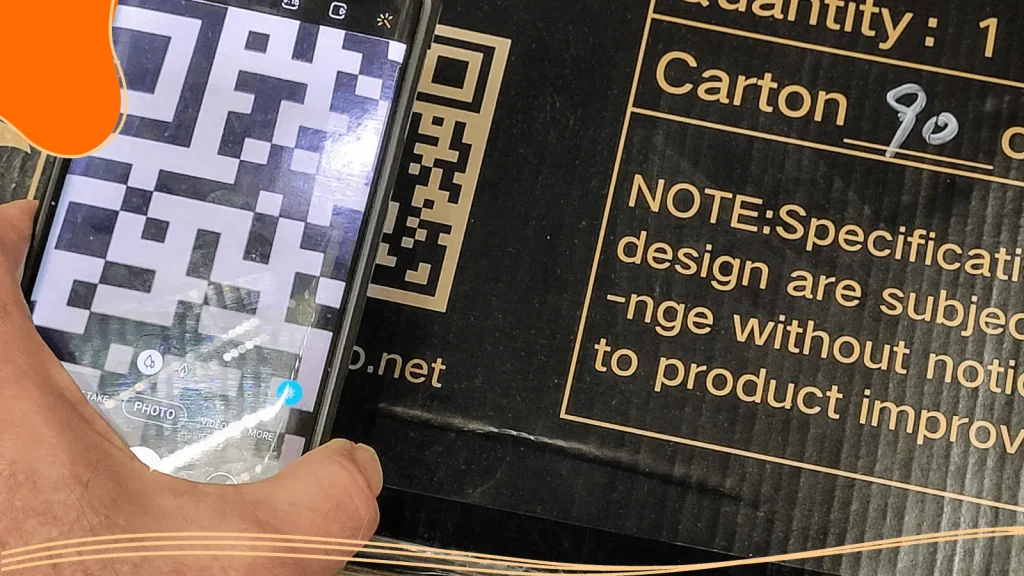
5. Test It on Different Phones
Scan the code with an iPhone and an Android device if possible. Check it in different lighting conditions and confirm that it opens the correct page.
It’s also worth testing the link on a mobile connection rather than relying entirely on your office Wi-Fi.
6. Add the Code to Your Business Card Design
Open the LogoMaker business card maker and choose a template that suits your brand. Upload the QR code using the image tool, then position it where people can find it easily.
Keep the code large enough to scan, leave space around it, and add a short call to action so recipients know what to expect. If your logo is going on the card too, here is how to put your logo on a business card template.
7. Review & Print a Test Run
Before placing a large order, inspect your design for alignment, spelling, contrast, and spacing. Scan the code in the final proof, then test at least one printed card before committing to a larger batch.
A little extra checking now can save you from reprinting hundreds of cards later.
For help choosing the right typography, take a look at our guide to the best fonts for business cards.
Common Mistakes That Can Stop QR Codes From Scanning
Even a well-designed card can run into problems if the QR code isn’t prepared properly. Watch out for these common issues:
- Making the code too small. Don’t shrink it just to fit more text or decorative elements into the layout. Simplify the design instead.
- Using poor contrast. Light code on dark backgrounds and similar shades can make scanning more difficult.
- Placing the code over a photo or pattern. Busy backgrounds can interfere with the code’s distinct shapes.
- Crowding the edges. Borders, text, and trim lines should never intrude into the quiet zone.
- Linking to a slow or broken page. Test the destination on a phone and make sure it loads correctly.
- Ignoring subscription terms. A dynamic QR code may stop redirecting if the service behind it is discontinued or your subscription ends.
- Skipping the print test. Always check the actual printed card, especially if you’re using textured or glossy materials.
The simplest way to avoid these problems is to keep the design clean, use a reliable destination, and test the complete card before ordering in bulk.
Make Your Business Card Work Beyond the First Meeting
A QR code can give your business card a useful second purpose: helping people take action after you’ve met. The right destination can make the connection more valuable, whether you want to share your work, collect reviews, book appointments, or promote a new offer.
Keep your design simple, give the code enough room to scan, and make the next step clear. Then test the finished card before sending it to print. For layout ideas that stick, see how to design a memorable business card.
With LogoMaker’s business card maker, you can create a design that reflects your brand and gives potential customers an easy way to connect with you.
FREQUENTLY ASKED QUESTIONS
Choose one destination that supports your main business goal. Popular options include a digital contact card, portfolio, booking page, customer reviews, online menu, or special offer. The best choice depends on what you want recipients to do next.
A code around 1 × 1 inch (2.5 × 2.5 cm) is a useful starting point, although the ideal size depends on its complexity and the printing conditions. Leave a clear margin of at least four modules (the small squares that make up the code) on every side, and test a printed sample before ordering a large batch. Our business card size guide lists standard card dimensions.
The back is often the easiest place because it leaves the front free for your name, logo, and key contact details. However, the front can work too if you have enough uncluttered space and the code remains easy to find and scan.
Static QR codes do not have an inherent expiration date, but the website or file they point to can become unavailable. Dynamic QR codes also depend on a third-party redirect service, so scans can stop working if a subscription lapses. Check the provider terms before using one on printed materials.
Level M (about 15% recovery) works for most simple codes. If you add a logo or expect wear on the card, choose Q or H (about 25% to 30%). Higher levels add modules, so the code gets denser and may need to be printed a little larger. Always scan a printed proof before you order.
Yes, if you keep the logo small and centered, raise the error correction level, and avoid covering the three corner squares. Test the finished code on both iPhone and Android before printing.
A vCard QR code saves your details straight to a phone, but it cannot be updated after printing and gets denser as you add fields. A link to a contact page you control stays current without reprinting, so it suits details that change.
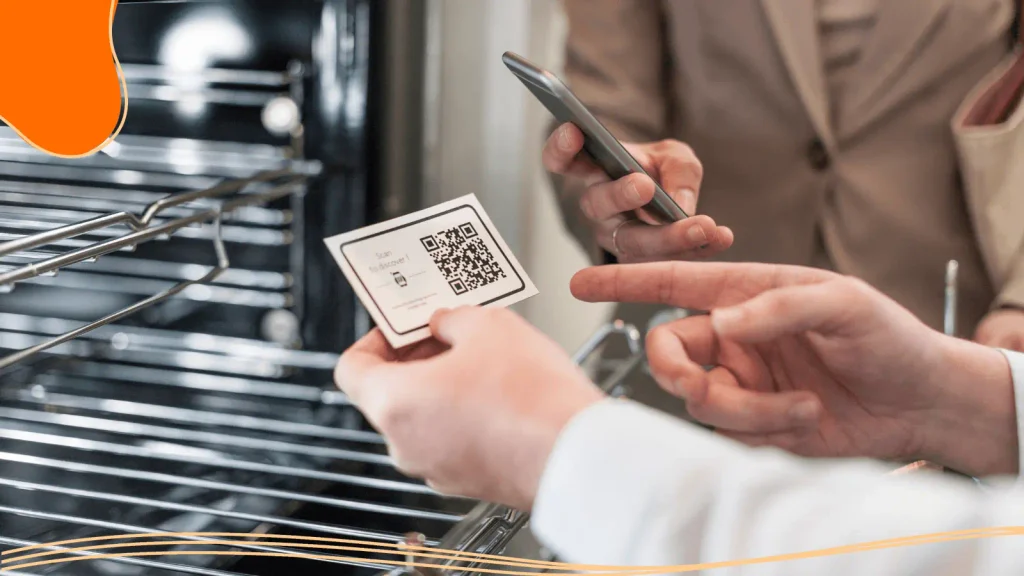
They serve different purposes and can work well together. A printed card gives someone a physical reminder of your business, while its QR code can link to a digital business card with updated contact details. See our comparison of digital, NFC and printed business cards for how they stack up.
LOGOMAKER BUSINESS CARDS
Turn your logo into business cards people keep
Design custom business cards in minutes, no design skills required. Start from a ready-made template or upload your own design, then choose the paper, shape, and finish that fit your brand.
- Standard, Premium, and Luxury card options
- Premium papers like matte, glossy, silk, linen, and kraft
- Finishing touches like rounded corners and painted edges