

If you’ve ever grabbed a caramel macchiato or a simple black drip at your local Starbucks store, chances are you’ve noticed that familiar green emblem staring back at you. That mysterious, alluring figure with flowing hair and a split tail; yes, the iconic siren.
But how did we get here? How did the Starbucks logo evolve from a brown, slightly risqué woodcut drawing to the sleek and modern green symbol we all recognize today? The journey of the Starbucks brand is as rich as a cup of their strongest roast.
In this article, we’ll take you on a voyage through the history and evolution of the Starbucks original logo, from the very beginning to its modern appearance. Along the way, we’ll meet the Starbucks founders, explore the mythological roots of the logo, dive into some fascinating design choices, and discover what’s behind the Starbucks logo that makes it so compelling.
So, grab your favorite cup of tasty coffee, settle into your coziest chair, and let’s get brewing.
Blog highlight: Starbucks’ original logo was edgy and rooted in myth, a perfect fit for a bold, artisanal coffee brand.
- The Very Beginning: A Logo Born from the Sea
- The Original Starbucks Logo: Bold, Brown & Bare
- Big Changes Brewing: Enter Howard Schultz
- The Green Makeover: Introducing the Familiar Color
- The Evolution of the Starbucks Logo: A Timeline
- Behind the Starbucks Logo: Why a Siren?
- A Modern Appearance for a Modern World
- The Starbucks Brand Today
The Very Beginning: A Logo Born from the Sea
To understand the original Starbucks logo, we need to… sail back to 1971 in Seattle, Washington. At this point in time, Starbucks wasn’t a global giant, nor was it the coffee shop we know today. It was a store that sold coffee beans, tea, and spices.
Enter Gordon Bowker, Jerry Baldwin, and Zev Siegl, the original founders of Starbucks. These three friends were inspired to create a business that celebrated the best of the coffee world. And yes, if you’re wondering, the company was indeed called Starbucks after the first mate in Herman Melville’s classic novel, Moby Dick.
The nautical theme was intentional. The company decided it wanted to forge a connection to the seafaring tradition of coffee traders. After all, coffee’s journey to your cup has always involved long voyages across oceans. So, when it came time to design a logo, they needed something that screamed maritime.
That’s where Terry Heckler came in. Heckler was a local artist and advertising specialist tasked with creating the original emblem. He delved into old marine books and stumbled upon a captivating image: a twin-tailed siren, or mermaid, from Greek mythology. She was designed to lure sailors with her charm.
It felt like a perfect metaphor: just like sailors were drawn to sirens, customers would be drawn to the alluring aroma of Starbucks coffee.
And just like that, the first logo was born.
The Original Starbucks Logo: Bold, Brown & Bare
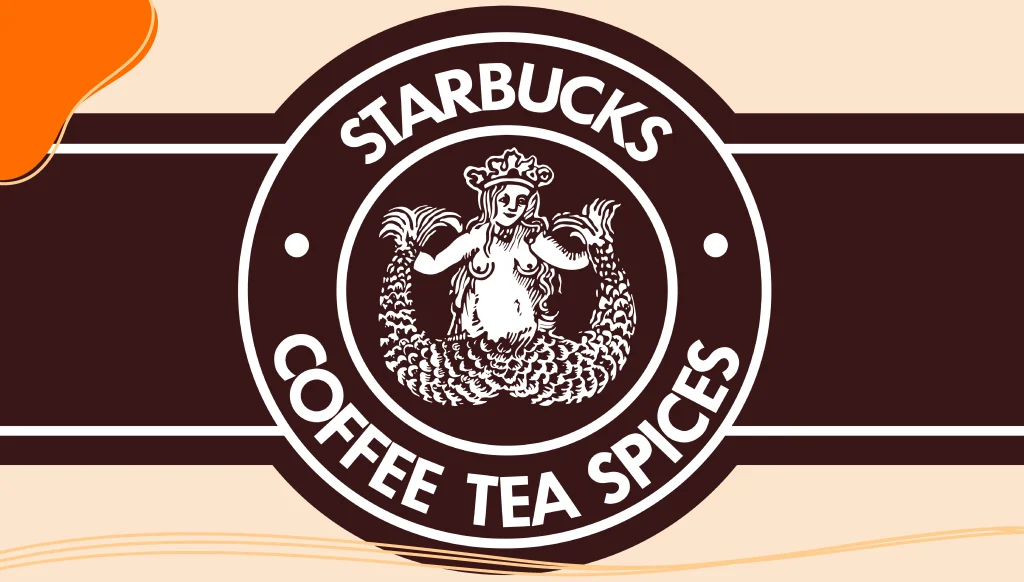
The original version of the Starbucks logo was unapologetically bold. The siren was depicted in a bare-breasted woodcut illustration, inspired by ancient art. She had long flowing hair, a crown atop her head, and a striking pair of split tails that she held out on either side.
This brown logo was encircled by the words “Starbucks Coffee Tea Spices,” reflecting the store’s original product lineup. It felt artisanal, old-world, and a little edgy; a far cry from the clean corporate logos of today. It gave off serious coffee house vibes, evoking a sense of craft and curiosity.
This logo made its mark as Starbucks slowly started to grow its presence in Seattle and nearby areas. Customers weren’t just buying coffee, they were actually buying into an aesthetic, a lifestyle, and a little bit of sea-borne myth.
Big Changes Brewing: Enter Howard Schultz
Everything changed when Howard Schultz entered the picture in the 1980s. Initially hired as Director of Marketing, Schultz had a vision for Starbucks that would transform it forever.
After a trip to Italy, Schultz was inspired by the café culture there, where coffee wasn’t just a drink but an experience. He wanted Starbucks to become a full-blown coffee shop, not just a seller of beans and equipment. The Starbucks founders were initially hesitant, but Schultz eventually bought the company and set out to turn his dream into reality.
This shift brought not just a new business model but also a new look. The Starbucks logo evolution had to begin to match the company’s new direction.
The Green Makeover: Introducing the Familiar Color
In 1987, a massive shift occurred. Starbucks underwent its first major rebrand to match its modern identity as a coffeehouse chain.
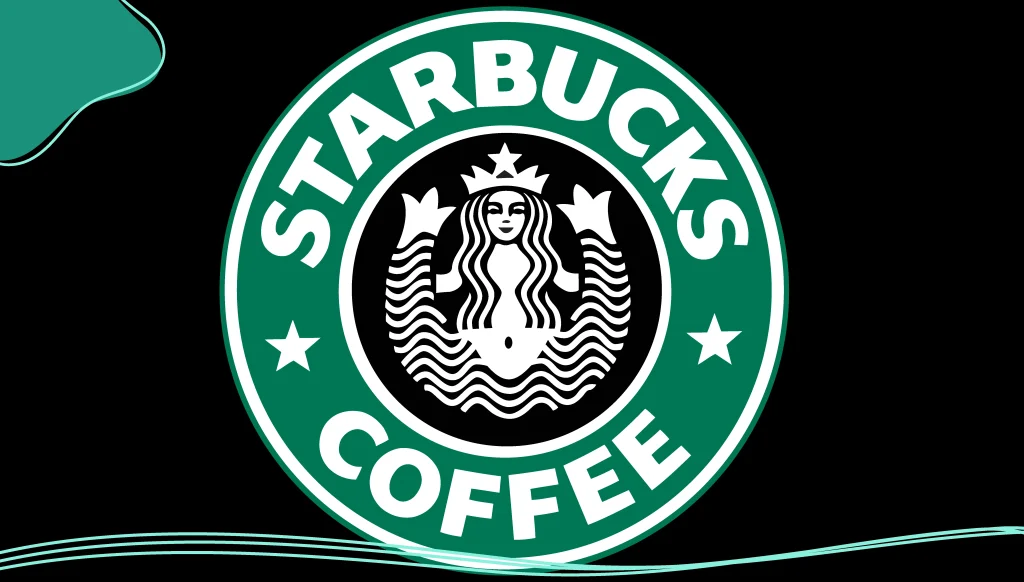
The brown tones of the original logo were replaced with green, a color that suggested growth, freshness, and prosperity. It also helped Starbucks stand out from the crowd of competitors.
The siren herself remained, but her design was softened. She still had her two tails, but the image was now cropped closer, focusing on her face and upper body. This redesign made her slightly less controversial and more brand-friendly, especially as the company expanded into more conservative markets.
Gone were the words “tea and spices.” Instead, the new logo read “Starbucks Coffee” in bold white letters wrapped around the green circle.

The Evolution of the Starbucks Logo: A Timeline
Let’s break down the evolution of the Starbucks logo in a quick overview to see how far it’s come.
1. 1971: The Original Logo
- Color: Brown
- Visual: Full-body two-tailed mermaid, bare-chested
- Text: “Starbucks Coffee Tea Spices”
- Vibe: Rustic, traditional, seafaring
2. 1987: The Green Siren
- Color: Green and black
- Visual: Cropped siren, still two-tailed but less revealing
- Text: “Starbucks Coffee”
- Vibe: Fresh, professional, modern café
3. 1992: Zooming In
- Color: Green circle with black outline
- Visual: Even closer crop of the siren; more stylized and symmetrical
- Text: Still “Starbucks Coffee”
- Vibe: Polished, upscale, global appeal
4. 2011: The Current Starbucks Logo
- Color: All green
- Visual: The siren only, no text
- Text: None
- Vibe: Confident, minimal, global icon
The current logo removed the company name altogether. Bold move? Yes. But by that point, the brand was so well known that the iconic siren alone was enough. Talk about a powerful brand identity.

Behind the Starbucks Logo: Why a Siren?
You might still be wondering, why a siren, really?
The answer is layered. The siren represents allure, a timeless myth of irresistible charm. In this case, she’s not luring sailors to doom but customers to delicious coffee. The connection to maritime culture (thanks again, Moby Dick and those marine books) also ties back to the idea of coffee beans traveling the world to reach your cup.
But there’s also something human about the siren; she’s mysterious, slightly mischievous, and has an eternal quality that mirrors Starbucks’ ambitions. She’s the soul of the Starbucks brand, offering more than a cup of joe; she offers an experience, a story.
A Modern Appearance for a Modern World
As Starbucks became the largest coffeehouse chain in the world, its logo design needed to keep up with the times.
The new Starbucks logo is sleek, versatile, and instantly recognizable even without the name. Whether it’s on a paper cup, a drive-thru menu, or a mobile app icon, the siren holds her own.
This minimalist direction reflects a broader trend in branding. Many major companies are simplifying their logos to stay relevant in the digital age. Starbucks continues to evolve, but its commitment to great coffee and community remains steady.
The Starbucks Brand Today
The Starbucks brand is more than just coffee; it’s a cultural force. With over 35,000 locations globally and counting, the company has turned a small Seattle shop into a worldwide phenomenon.
From offering local blends to seasonal favorites and now a focus on sustainability and digital innovation, Starbucks isn’t afraid to try new things. But the siren? She stays. Because she’s not just a logo, she’s a symbol of what the brand stands for: tradition meeting innovation, craft meeting convenience, and human connection over a simple, everyday drink.
Final Sip: More Than Just a Cup
The evolution of the Starbucks logo is a story of vision, adaptability, and timeless branding. From a bare-breasted siren in brown to a sleek green emblem known across the globe, Starbucks has brewed more than just a successful business; it’s brewed a cultural icon.
And while Starbucks continues to grow, offering new drinks, embracing technology, and opening locations in more corners of the world, the siren remains at its core. A gentle reminder that whether you’re in a bustling city or a sleepy town, there’s a familiar face waiting for you, with a warm (or iced) cup in hand.
So next time you sip your latte and glance at that little green circle, remember: there’s a whole ocean of history in that cup!
Inspired by Starbucks’ story? Create your own amazing logo using LogoMaker’s AI-powered platform. Craft an eye-catching logo in just minutes!

FREQUENTLY ASKED QUESTIONS
What does the Starbucks logo mean?
The Starbucks logo features a twin-tailed siren, inspired by Greek mythology, meant to represent allure and the irresistible nature of coffee. It also connects to the seafaring heritage of coffee trading.
Who designed the original Starbucks logo?
The original Starbucks logo was created by artist Terry Heckler, who drew inspiration from old marine books and maritime art.
Why did the company choose a siren?
The company decided on a siren because of its connection to the sea, which mirrored how coffee beans traveled across oceans. The siren also symbolized the way customers are drawn to the aroma and experience of Starbucks coffee.
When did Starbucks change its logo to green?
The logo turned green in 1987, when Howard Schultz bought the company and transitioned it into a coffee shop brand. The green color signified growth, freshness, and a new direction.
Why was the word “coffee” removed from the logo in 2011?
By 2011, Starbucks had become such a recognizable brand that it no longer needed text. The new logo focused solely on the siren, reflecting confidence in the brand identity and expanding into new opportunities beyond just coffee.
Who were the Starbucks founders?
The company was founded by Jerry Baldwin, Gordon Bowker, and Zev Siegl in Seattle in 1971. Howard Schultz later bought the company and turned it into the global brand it is today.
What font does Starbucks use?
The Starbucks wordmark has evolved, but it generally uses a clean, sans-serif font. In the most recent version, the text was removed entirely for a more visual logo-based branding.
Why is the Starbucks logo so iconic?
Because it tells a story, the Starbucks logo evolution reflects the company’s growth, values, and connection to mythology, art, and history, all while maintaining a distinctive and memorable design.