
Holidays are here, and you’re ready to give out cards for all of your clients and collaborators. What’s next? You pick a design and add your logo or photo. Now you’re ready to order your holiday cards, right? Well, now comes one more decision: flat or folded?
That choice can shape the entire card, from how much room you have for a personal message to how your photos and colors look in print. You’ll also need to think about the card’s orientation and finish, especially if you’re deciding between a photo-friendly glossy surface and a matte finish that’s easier to write on.
So, which holiday card format should you choose? In this guide, we’ll compare folded vs. flat holiday cards, look at the pros and practical considerations of each, and explain how glossy and matte finishes can affect the final result. We’ll also cover a few ordering details to check before you send your cards to print.
Let’s start with the layout.
- Choosing the Right Layout for Your Custom Holiday Cards
- The Case for Flat Holiday Cards
- The Case for Folded Holiday Cards
- Glossy vs. Matte Finishes: Which Is Better?
- Logistics & Ordering Checklist
Choosing the Right Layout for Your Custom Holiday Cards
Before you choose between flat and folded, think about your card’s orientation. Portrait cards are taller and work well with vertical photos, individual portraits, and stacked text. Landscape cards give you more horizontal space, which can work well for group photos, storefront images, and wider logos.
LogoMaker’s stationery options give you different ways to present your brand, including holiday cards. Start by thinking about how you want the finished card to look.
Then ask yourself:
- How much do you want to write by hand?
- Is your photo the main focus, or is your message?
- How many cards are you sending?
- Are you sending the same greeting to everyone, or writing individual notes?
Your answers can help narrow down the right format.
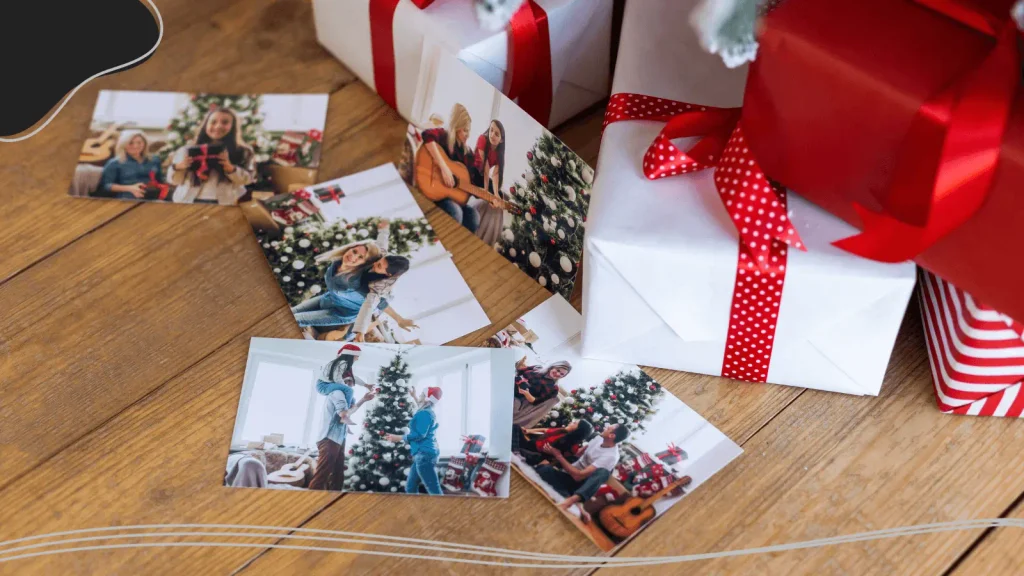
The Case for Flat Holiday Cards
A flat card is a single piece of card stock with a front and back. There’s no fold, so your design can use the full surface of each side.
Modern, Quick, & Sleek
Flat cards work well when you want your photo or design to take center stage. A photo can stretch across the front without a fold interrupting the image, while the back gives you space for a printed greeting, your logo, website, or other details.
They’re also practical for larger mailing lists. If you’re signing hundreds of cards, a short message on the back of a flat card can save a lot of time compared with writing a longer note inside each folded card.
Flat cards also have a clean, simple look that works well for business holiday greetings, family photo cards, and minimalist designs.
Best for: Business holiday cards, photo cards, large mailing lists, and simple designs.
The Case for Folded Holiday Cards
A folded card gives you four surfaces: the front, two inside panels, and the back. That extra space gives you more room to make the message part of the card.
Traditional & Roomy for Handwritten Notes
The inside of a folded card gives you space for a personal note instead of just a signature. That’s useful if you’re sending cards to family, close friends, or clients you know well.
You can also separate your printed greeting from your handwritten message. For example, place your artwork on the front, add a printed holiday greeting inside, and leave part of the interior open for your personal note.
If you’re not sure what to write, our guide to what to write in holiday cards has ideas for different types of greetings.
A folded format can also give your card a more traditional feel. The recipient opens it to see the message inside, which creates a little more room for a personal greeting.
Best for: Smaller mailing lists, personal messages, family greetings, and year-in-review notes.
| Flat | Folded | |
| Panels | 2, front and back | 4, front, two inside, and back |
| Writing space | Short greeting | Longer handwritten note |
| Look | Modern and simple | Traditional and substantial |
| Best for | Large mailing lists | Small to medium lists |
Glossy vs. Matte Finishes: Which Is Better?
Your card’s finish affects how colors, photos, and handwritten messages look. When comparing glossy vs. matte holiday cards, think about what you’ll put on the card and how you’ll use it.
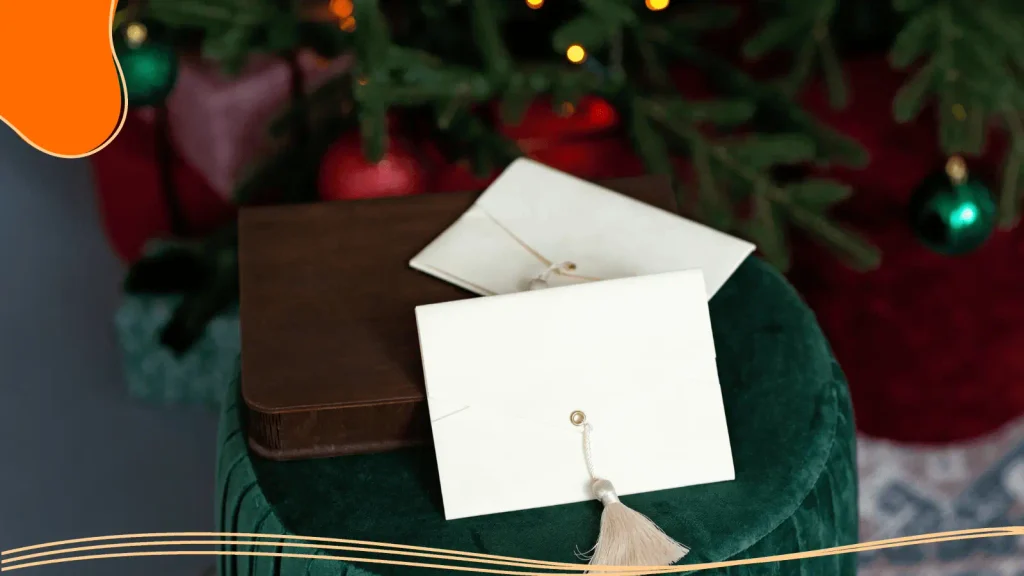
When to Use Matte
Matte has a smooth, non-shiny surface that works well for handwritten messages. Pen ink can dry more easily than it does on a glossy surface, making matte a practical choice if you plan to write inside or on your cards.
Matte also reduces glare, which can make text easier to see under bright lighting. Its softer appearance works well for designs that rely heavily on typography or lighter colors.
When to Use Glossy
Glossy finishes reflect light, which can make colors look richer and photo details appear sharper. If your holiday card centers on a family photo, team picture, or another image, glossy can help the image stand out.
The tradeoff is that glossy surfaces can show fingerprints and glare. They’re also less suited to handwritten messages because many pens don’t dry as easily on a glossy surface.
Think about the main purpose of your card. A photo-focused design with a printed message may suit a glossy finish, while a card that leaves room for personal writing may be better suited to matte.
Logistics & Ordering Checklist
Before you place your holiday card order, run through this quick checklist:
- Count your mailing list. Add a few extra cards for last-minute additions or mistakes.
- Check your card size. Make sure your envelope size matches your finished card and confirm what’s included with your order.
- Review your design in print. If possible, order a sample so you can see how the colors and layout look on paper.
- Plan for postage. Folded cards and heavier paper can affect mailing costs, so check with your local postal service if you’re sending a large batch.
- Check every address. Make sure names and mailing addresses are current, especially for business contacts.
- Give yourself extra time. Leave enough time for printing, addressing, and mailing, particularly if you’re sending cards internationally.
- Proofread your fixed text. Check names, dates, your logo, website, and contact information before placing the order.
If you’re creating cards for your business, you can also use your holiday design as part of a broader branded gifting strategy. Our company swag guide has ideas for keeping branded materials consistent across different items.
The right format comes down to how you want people to experience your card. Choose flat if you want a simple, photo-forward design that’s easy to prepare for a large mailing. Choose folded if you want more room for a personal message.
Ready to create yours? Get started with LogoMaker and create a holiday card that puts your design, brand, or message front and center.