
Business cards have been a staple of professional networking for decades. They’re compact, informative, and they can say a lot about your brand in a small amount of space. But in an age where sustainability is no longer a bonus but a necessity, one big question remains: Are business cards recyclable? And more importantly, how can modern companies make their business cards more eco-friendly?
A well-reported stat on the lifecycle of business cards claims that 88% of business cards are thrown away within a week of being received. This means that a significant portion of printed business cards end up in landfills instead of being used for their intended purpose. However, in recent years, there has been a greater push for the use of recycled business cards to help make business cards a more eco-friendly networking tool.
In this article, we’ll explore eco-conscious business card options, sustainable materials, and creative tips that can help your company make a lasting impression on people, not the planet.
- Why Business Cards Are a Great Marketing Tool
- Are Business Cards Actually Recyclable?
- Why Should You Care About Recyclability?
- What Makes a Business Card Eco-Friendly?
- Materials Matter: The Green Alternatives
- Design Tips for Eco-Friendly Business Cards
- Printing with the Planet in Mind
- Beyond Business Cards: Stickers, Tags & More
- Digital Business Cards: Are They the Future?
- What Happens If Business Cards Can’t Be Recycled?
Why Business Cards Are a Great Marketing Tool
Before we delve into the sustainability of recycled business cards, let’s take some time to talk about why business cards are so important to your business’s marketing efforts. You might think that in today’s digital world, business cards are no longer relevant; you’d be wrong.
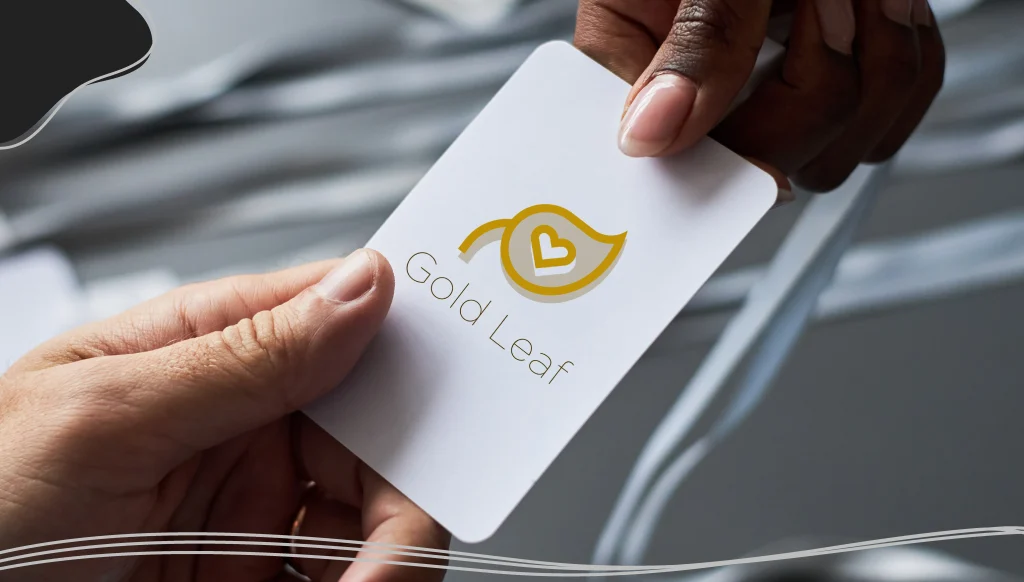
Your business card is a visual handshake, and making a great first impression matters more than you might think. Your business card is often the first tangible representation of your brand that clients will hold in their hands. If they’re greeted with a premium feeling card with captivating visuals, they are far more likely to use your products or services.
Here are a few reasons why business cards are such great marketing tools.
Convenience
Imagine you meet a potential client at a conference, and they’re interested in doing work with you. You could ask them to pull out their phone and enter your contact information, but that process is inelegant and unprofessional. If you pull out a nicely designed business card that they can take with them, it’ll help cement your business proposition in their minds.
Professionalism
Having a polished business card printed on high-quality materials shows that you’re dedicated to your business, highlighting your attention to detail and professionalism. It can also demonstrate that your business is successful, lending you additional credibility with potential clients.
Not Reliant on Technology
You might encounter potential customers who don’t like working with smartphones, and in these instances, business cards provide a wonderful alternative. You never know when you could run into a potential client, so having a supply of business cards on hand can help you promote your business without having to rely on technology.
Expressive
Creative professionals such as designers, photographers, and artists can showcase their skills directly through an illustrative business card. You can provide a potential client with a sneak peek of your art style.
Real
In a world dominated by emails and instant messages, it’s refreshing to receive something tangible. Business cards bridge the digital divide by offering a physical reminder of a conversation. When someone places your card in their wallet, desk drawer, or card holder, it’s an artifact of your interaction that will stay with them.
Nothing leaves a stronger impression than a crisp, well-designed business card. Create your own amazing cards using LogoMaker’s Business Card Maker.

Are Business Cards Actually Recyclable?
The answer is: Yes—and no.
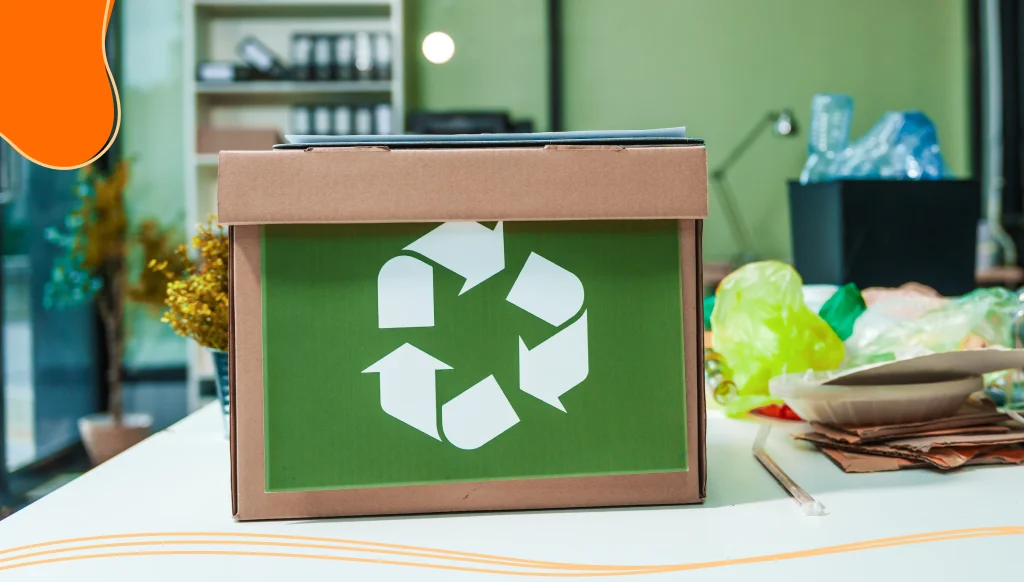
Traditional paper business cards can be recyclable, but it depends heavily on how they’re made. If your cards are printed on standard paper with an uncoated finish and without any embellishments like plastic laminate, metallic foils, or silk coating, then they’re generally accepted in paper recycling streams.
But the second you add glossy coatings, thick laminates, or plastic elements to make your cards “pop,” you reduce or eliminate their recyclability. Many cards end up in landfills purely because they include non-recyclable materials, even if they only make up a small part of the design.
This is where eco-friendly recycled business cards come into play.
Why Should You Care About Recyclability?
In today’s world, businesses are expected to do more than just deliver great products or services—they’re expected to care. Consumers want to support companies that value sustainability, reduce waste, and minimize environmental impact. Using recycled business cards or recycled paper business cards is one easy, impactful way to show your values.
It’s not just about doing good for the environment—it’s also a fantastic way to promote your brand as forward-thinking, conscious, and creative. Your business card doesn’t have to just be informative; it can also deliver a message.
What Makes a Business Card Eco-Friendly?
An eco-friendly business card is one that is made using sustainable practices and materials. This includes:
- Recycled materials: Such as post-consumer recycled paper, bamboo, cotton, or even recycled matte finishes.
- Sustainable printing processes: Using soy-based inks or digital printing that reduces waste.
- Uncoated finish: Easy to recycle, and often more tactile and professional-looking.
- No laminates or plastic coating: Even if you’re tempted by the shiny, smooth finish.
- Rounded corners: These can be stylish and also reduce wear and tear, prolonging the life of the card.
And the good news? You don’t have to sacrifice great quality to go green. Today’s sustainable printing methods offer crisp detail, vivid photos, and complete design options that rival any traditional printer.
Pre-Consumer vs. Post-Consumer Recycled Paper
You might be wondering what the terms pre-consumer and post-consumer mean. Here is a quick rundown of what each term means and how they differ:
- Pre-consumer recycled content: This is made from manufacturer waste that never actually made it to the consumer for one reason or another: scraps, rejects, trimmings—the stuff that ends up on the factory floor and is repurposed into something new rather than trashed.
- Post-consumer recycled content: This is made from waste that’s been used by a consumer, disposed of, and diverted from landfills—stuff like the aluminum cans and newspapers that you place in your recycling bin for pick-up.
While both kinds of material aid in greater sustainability, post-consumer recycled content is considered to have greater eco-benefits than pre-consumer recycled content.
Materials Matter: The Green Alternatives
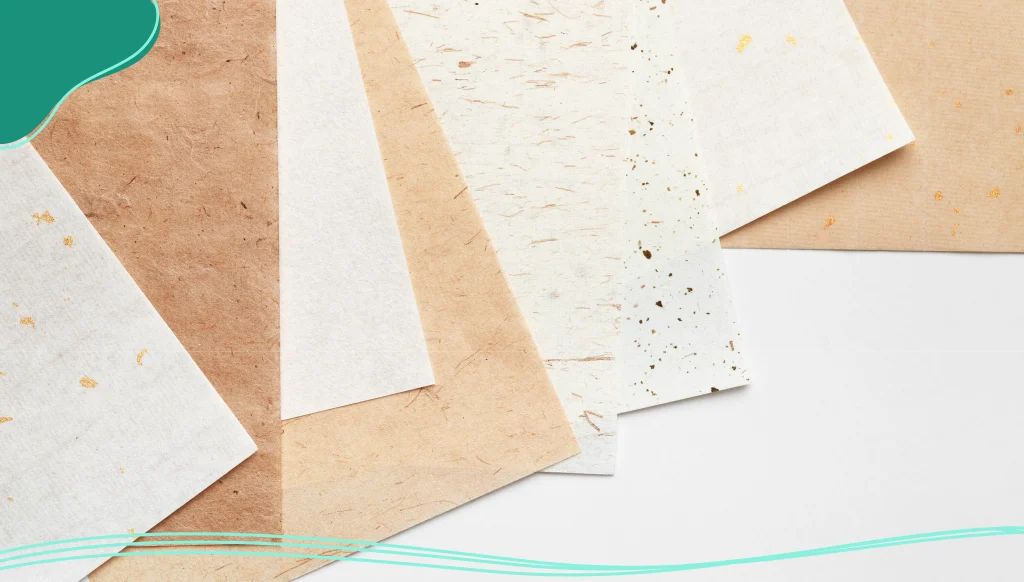
Let’s talk paper. Not all paper is created equal, especially when sustainability is the goal. Here are some popular eco-friendly materials to consider:
1. Recycled Paper
This is the go-to for many sustainable business card printers. Recycled paper business cards come from paper that’s already been used, often with post-consumer recycled content. It reduces the need for virgin fiber and cuts down on deforestation and energy use.
2. Bamboo
Fast-growing and renewable, bamboo offers a unique, organic texture. Bamboo cards are crafted for durability and are completely biodegradable. In addition to their eco-friendliness, bamboo business cards also often have a unique texture, making them stand out.
3. Cotton
Made from recycled t-shirt scraps or cotton linters, cotton paper is luxuriously soft, naturally bright white, and fully recyclable. If you want to go one step further, you can use organic cotton for your recycled business cards.
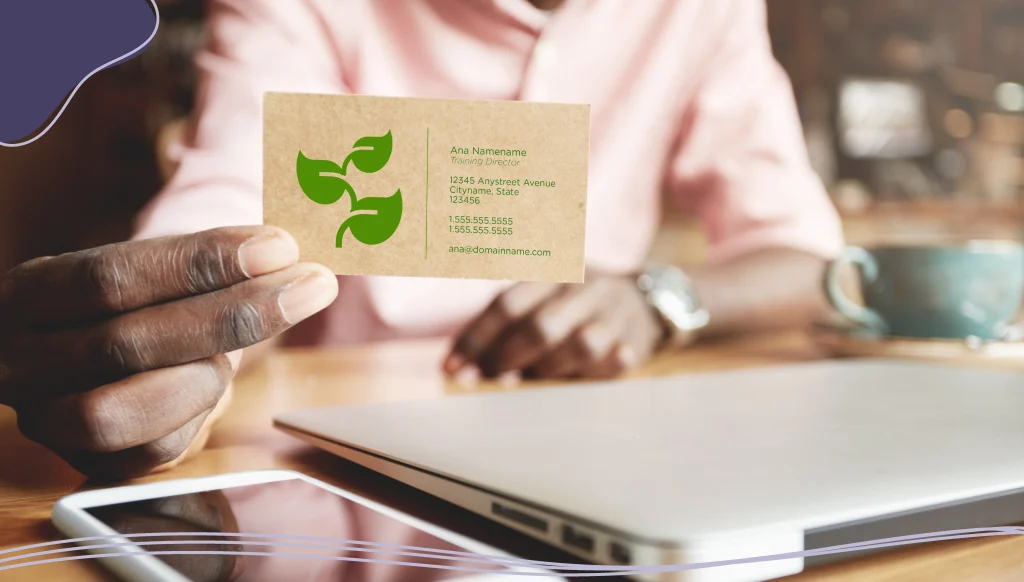
4. Kraft Paper
Brown, textured, and earthy. It gives your card a more organic, rustic look and feels authentic. Plus, it’s typically made from recycled materials and is 100% recyclable.
5. Seed Paper
Yes, it’s exactly what it sounds like—a card embedded with seeds that can be planted. Not only is it recyclable, but it grows into flowers or herbs. Now that’s a memorable business card.
Design Tips for Eco-Friendly Business Cards
Just because you’re going green doesn’t mean your card has to be boring. In fact, sustainable business cards often stand out more because they look and feel different. Here’s how to create a card that’s as stylish as it is sustainable:
Keep It Simple
Stick with an uncoated finish for that raw, tactile feel. Avoid heavy coatings or laminates that make recycling difficult. This stripped-down version of a recycled business card will allow you to focus on a few key visual cues that can really make your card shine.
Use Both Sides
Maximize your space by printing on both sides of your card. Include your contact info, logo, maybe even a QR code that leads to your website or digital portfolio. LogoMaker’s intuitive Business Card Maker makes it easy to customize both sides of your business card before printing.
Go Square or Rounded
Rounded corners and square formats make cards more durable, preventing bent edges and increasing the chance they’ll be kept.
Choose a Clean, Modern Font
Keep your template clean and legible. Pair your complete design with a minimalist font for a modern, professional look. If you’re looking for some inspiration, you can read our recent article on the best fonts for business cards.
Add a Sustainability Message
Tell people what your card is made from—something like “Printed on 100% recycled paper” or “This card is compostable.” That little detail makes a big impression.
Using LogoMaker to Create Eco-Friendly Business Cards
LogoMaker offers a user-friendly online platform that enables individuals and businesses to create stunning, custom business cards without the need for extensive design knowledge or experience.
No need to hire a professional graphic designer; you simply choose a template that suits your business needs and style. Then customize the template by editing the text, inserting your logo, and modifying other design elements. With fast shipping turnarounds, quality paper printing options, and affordable prices for business cards, LogoMaker is the perfect fit for all businesses.

Printing with the Planet in Mind
You don’t just want eco-friendly business cards—you want them made in eco-friendly ways too. Here’s what to look for in a printer:
- Offers recycled paper and recycled matte options.
- Uses low-VOC or soy-based inks.
- Offers more quantities at once to reduce shipments.
- Allows you to customize your card online and see a preview.
- Ships in recyclable or organic packaging.
Make sure your company is choosing printers with strong environmental commitments. Many now operate with carbon-neutral processes or use renewable energy in their production.
Beyond Business Cards: Stickers, Tags & More
Want to take your sustainability game up a notch? Consider matching eco-friendly business cards with other sustainable branding elements:
- Stickers printed on biodegradable materials
- Tags made from kraft or recycled paper
- Reusable thank-you cards or promotional items
- Digital business cards to supplement physical ones
It all adds up to a more cohesive, planet-friendly image that customers notice—and appreciate.
Digital Business Cards: Are They the Future?
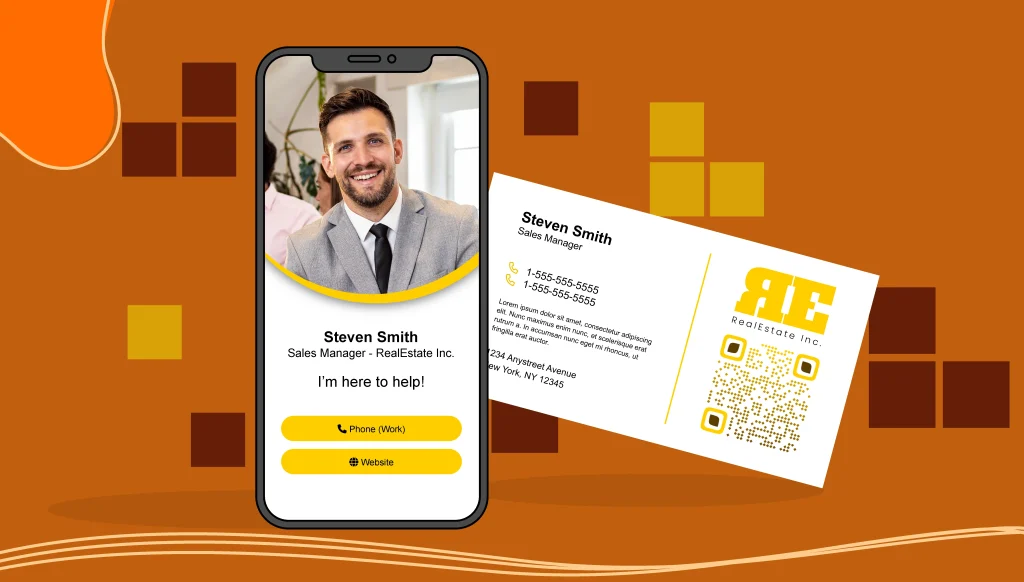
Let’s be real—no matter how recyclable or green your card is, zero waste is better. That’s where digital business cards come in. Apps and platforms now let you share your info via QR codes, email, or NFC technology. Along with being more eco-friendly, digital business cards also provide additional functionality that you can’t find with traditional cards, including:
- The ability to instantly share your contact information with a tap or scan.
- Updating your details in real time without reprinting cards.
- Standing out with interactive features like videos, links, and social profiles.
- Integrating with platforms like your Apple Wallet, email clients, and even CRM software for lead generation.
- Easily link to all of your digital tools and social media platforms.
- Prompt customers to download additional information seamlessly.
While digital cards reduce the need for paper entirely, they’re not always practical. That’s why combining physical cards with a digital presence is often the smartest move. A creative hybrid strategy helps you reach everyone, sustainably.
What Happens If Business Cards Can’t Be Recycled?
If your cards aren’t made from recyclable or sustainable materials, they may end up in a landfill. That’s the harsh truth. Glossy finishes, plastic coatings, and laminate layers make it impossible for the fibers to be reused.
To avoid that, steer clear of unnecessary embellishments and ask yourself: “Would this card break down naturally?” If not, it’s time for a change.
Eco-Friendly Business Is Smart Business
In the end, embracing sustainable business practices like switching to eco-friendly business cards isn’t just about the environment—it’s about the message you send. A thoughtfully designed, environmentally responsible card tells the world that you care. And that’s a brand image worth cultivating.
Conclusion
Your business card is a statement to the world about what you prioritize as a company. And in a world where sustainability is becoming the norm, that statement can (and should) reflect your commitment to the environment.
By choosing eco-friendly business cards, printed on recycled paper, free from laminates, and designed with care, you’re doing more than networking. You’re building a sustainable business identity that resonates with today’s conscious consumers.
LogoMaker’s easy-to-use Business Card Maker allows you to choose from thousands of fully customizable business card templates. Once you are happy with your design, choose from our selection of eco-friendly card stocks and print your business cards, worry-free.
FREQUENTLY ASKED QUESTIONS
Are all business cards recyclable?
No. Only uncoated, non-laminated cards printed on recyclable paper can be recycled. Cards with plastic, foil, or glossy coatings typically aren’t recyclable.
What is the best material for sustainable business cards?
Recycled paper, cotton, bamboo, and kraft paper are top choices for eco business cards. They’re durable, attractive, and environmentally responsible.
Can I get stylish business cards without sacrificing sustainability?
Absolutely! Many eco-friendly business cards are crafted with stunning design options. You can even choose rounded corners, unique shapes, and premium textures.
Do recycled business cards look cheap?
Not at all. In fact, they often look better than traditional ones, offering a naturally bright tone with white edges or an earthy, textured feel that’s both high-end and professional.
How can I make sure my business cards align with my brand?
Choose a template that matches your logo, message, and brand voice. You can customize the look online, upload your file, and order more quantities to get the exact effect you want. With online services like LogoMaker, you can order amazing, high-quality, sustainable business cards at affordable prices.
Should I include a note about recyclability on my card?
Yes! It’s a small but powerful detail that boosts your green credibility. You can simply write “Printed on 100% recycled paper” or add a recycling symbol near the contact info.
Can I still have a thick business card and be eco-friendly?
Yes. Many recycled paper business cards and post-consumer recycled options come in thick, durable weights that feel just as substantial as traditional stock.
What’s the most eco-friendly finish?
An uncoated finish is your best bet—it’s fully recyclable and provides a tactile, professional surface perfect for writing or note-taking.