
Logo design cost is something that can be difficult to pin down because of the wide range of figures that you’re likely to encounter. Some businesses create an iconic logo for free, while others sink hundreds of thousands of dollars into the logo design process.
Having an eye-catching and easily recognizable logo is incredibly important when you’re building a brand, so you don’t want to create something subpar. At the same time, budget restraints (particularly for small businesses) may impact how much you’re able to spend on your logo design cost.
Some business owners put a tremendous amount of value in getting the right logo for their company, and they spare no expense.
For example, when Steve Jobs left Apple in the mid-1980s to start NeXT Computer, he felt that the logo for his new company had to be perfect. He recruited the legendary designer Paul Rand to create a 100-page proposal document for the new logo. The logo design cost ballooned to nearly $100,000.
In this article, we’ll walk you through everything you need to know about logo pricing. We’ll explore what drives logo design cost, the different pricing options, what you should expect from good logo designers, and how to make sure you get value for your money.
- Why Logo Design Cost Varies So Much
- The Main Logo Design Pricing Options in 2025
- What’s Included in Logo Design Prices?
- How the Design Process Usually Works
- Why a Well-Designed Logo is Worth the Investment
- How to Decide What’s Right for Your Logo Project
Why Logo Design Cost Varies So Much
When considering the cost of a meal, the answer depends on whether you’re grabbing fast food, dining at a local restaurant, or booking a table at a Michelin-starred restaurant.
Logo pricing works the same way.
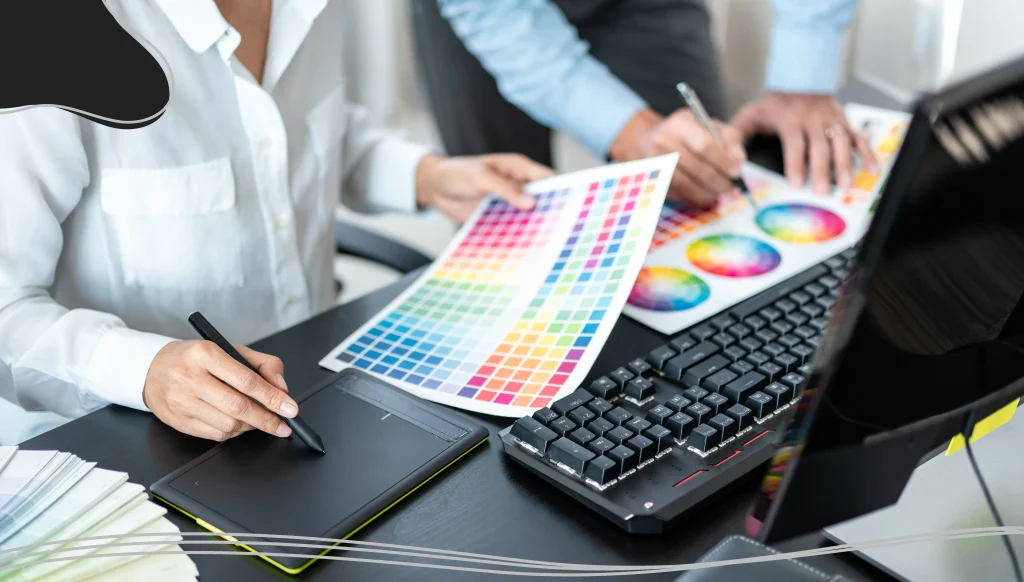
A basic logo created with pre-made templates on a logo maker might cost nothing or just a small subscription fee. On the other end of the spectrum, a professionally designed logo from seasoned designers at a top-tier branding agency, complete with a brand style guide, custom fonts, and market research, can cost tens of thousands of dollars.
The truth is, the price of your final logo depends on:
- Design process: Are you using templates, tweaking some stock icon, going through a freelance contest, or hiring a full agency with research, sketching, revisions, and brand strategy?
- Designer expertise: A brand-new freelancer will charge less. A freelance designer with years of experience, or an established design agency, will charge more.
- Scope of the logo project: Do you need just a simple logo? Or do you need logo variations (for different sizes, backgrounds, etc.), a brand style guide, and other marketing materials, like business cards, social media graphics, packaging, and custom fonts?
- Intricate details and custom work: Do you need hand-drawn illustration, custom typography, or other unique elements? These take more time and skill.
- Revision rounds: How many rounds of feedback and adjustments are included? More revisions cost more, sometimes significantly more.
- Usage rights and file types: Vector files, high-res versions, different color versions (full color, black and white, light and dark backgrounds), different format exports for print vs digital. If you want rights to trademark or exclusive ownership, these can also affect the price.
- Location Designers’ rates vary by geography and demand. Someone in a major design hub or city will often charge much more than someone in a less expensive region.
- Turnaround time: Urgent jobs often cost more. If someone needs a high-quality logo quickly, you might pay a premium.

The Main Logo Design Pricing Options in 2025
The logo design cost can be very different for small businesses vs. established businesses.
- Small business owners: Often choose budget-friendly options like logo makers, contests, or freelance designers. The focus is on affordability and speed.
- Established businesses: Usually invest in professional logo design through design agencies. They want a memorable logo that aligns with long-term branding goals and marketing materials.
The difference comes down to the client’s budget and the stage of the brand’s journey.
The Top 4 Most Common Logo Pricing Options
Let’s dive into the most common ways to get a logo designed in 2025 and what each option might cost.
1. DIY Logo Makers (Free to $100)
If you’re just starting out and need something quick and budget-friendly, online logo makers are a solid choice. You choose from pre-made templates, customize colors, fonts, and icons, and download your logo files.
This is best for: small business owners with limited budgets, side hustlers testing an idea, or startups needing a placeholder logo.

Creating a Free Logo Design Using LogoMaker
If you want a sleek, professional logo without spending hundreds of dollars, LogoMaker is a fantastic place to start. Let’s walk through how to make your own custom logo through this excellent online tool, step by step:
Step 1: Visit the Website
Head to https://www.logomaker.com/ and click on the free logo maker tool. You don’t even need an account to start playing around with logo ideas.
Step 2: Enter Your Business Name
Type in your business name, industry, and an optional tagline when prompted. This is the text that will appear on your company logo.
Step 3: Consult LogoMaker’s AI Design Tool
Meet LOGI, LogoMaker’s AI design interface. LOGI can ask a few questions to guide you, or if you have an idea, you can let it know, and it will work its magic. After going through a few preferences, LOGI will create four logo designs that you can choose from. If you want to try something different, you can have LOGI edit the logos until you are satisfied.
Step 4: Pick a Logo Design & Customize
After you find a logo that you like, select it and proceed to the customization section. Here you can change the colors, fonts, and size of your logo design. This is also where you can find logo mockups of how your logo will look on websites, business cards, and t-shirts.
Step 5: Save & Download
When you’re happy with your design, you can save your work and download your free logo. Additionally, you can purchase a logo package that includes: higher resolution files, transparent background versions, multiple logo file formats, online Storage, unlimited LOGI usage, and much more.
2. Logo Design Contests ($200 to $1,500)
A logo contest is when you launch a project on platforms like 99designs, and several designers submit their ideas based on your brief. You post your branding goals, multiple designers create options, and you choose your favorite.
This path provides lots of choices, budget-friendly options, and exposure to different design styles. One major downside to this approach is that the quality can vary wildly, and not all submissions may be original; you may not get the deep understanding that comes with working one-on-one.
3. Freelance Logo Designers ($300 to $3,000)
Hiring a freelance designer is one of the most popular ways to create a distinctive logo in 2025.
You hire an independent designer on platforms like Upwork, Fiverr, or through referrals. They guide you through the creative process and deliver your final logo.
This method provides personalized service, custom work, and more collaboration compared to logo makers or contests.
The quality will depend heavily on the designer’s skill, communication, and professional expertise. You’ll likely have to work closely with the designer to make sure that your vision is fully realized.
4. Design Agencies ($5,000 to $50,000+)
For businesses that want the full treatment, design agencies are the go-to. A team of professional designers and strategists works together to deliver not just a logo but a full visual identity package. This often includes a brand style guide, marketing materials, and a strategy tied to your business data.
This is a popular option for many large businesses that want the full package when it comes to logo design. However, the massive price tag doesn’t always equate to a great logo.
In 2008, Pepsi paid the Arnell Group (an award-winning New York-based branding and packaging design firm) $1 million to design its new logo. The logo was designed based on the Golden Ratio and was one of the most expensive graphic design jobs of all time.
The end result? The new Pepsi logo was met with a tepid response, and the company was forced to roll back the rebranding efforts.
This just goes to show that paying more for your logo design won’t guarantee the response that you want.
What’s Included in Logo Design Prices?
When you pay for logo design, you’re not just paying for an image; you’re paying for expertise, tools, and the creative process.
Here’s what’s often factored into logo pricing:
- Software costs: If a designer (or you) uses expensive design software (Adobe Illustrator, Sketch, Canva Pro, etc.), that cost gets baked into the price. Even the subscription cost for tools like Adobe Creative Cloud can be non-trivial.
- File formats and usage: If you need vector files (AI, EPS, SVG), printable versions (CMYK), Pantone matching, etc., those can increase cost. If you need your logo on signage, screen printing, or large-scale print, high resolution and specific file types are necessary.
- Trademarking and usage rights: If you want exclusive ownership, rights to use, legal safety, and the ability to trademark the logo matters. Some low-cost options may have limited or unclear rights. Always check ownership/rights.
- Additional branding pieces: If you need complementary assets (business cards, social media graphics, stationery, packaging, signage), the cost for these is extra. Sometimes they are bundled; sometimes they are not.
- Brand style guide: To have consistency (fonts, color palette, and how the logo should be used), you might want a brand style guide. That adds to design cost but often pays off in long-term consistency.
How the Design Process Usually Works
If you hire an experienced designer or agency (or even a good freelance designer), here’s a typical logo design process you can expect.
Understanding this helps you know what you’re paying for.
Discovery & Research
You, the client, and the designer or agency have a preliminary talk.
The designer usually asks questions like:
- Who is your audience?
- What are your values?
- What makes you different?
- Who are your competitors?
- What do you like/dislike visually?
- What’s your vision?
The designer will then conduct some market research: seeing what similar brands are doing, what designs are already in your industry, and what visual styles might help you stand out.
Sketching & Concepting
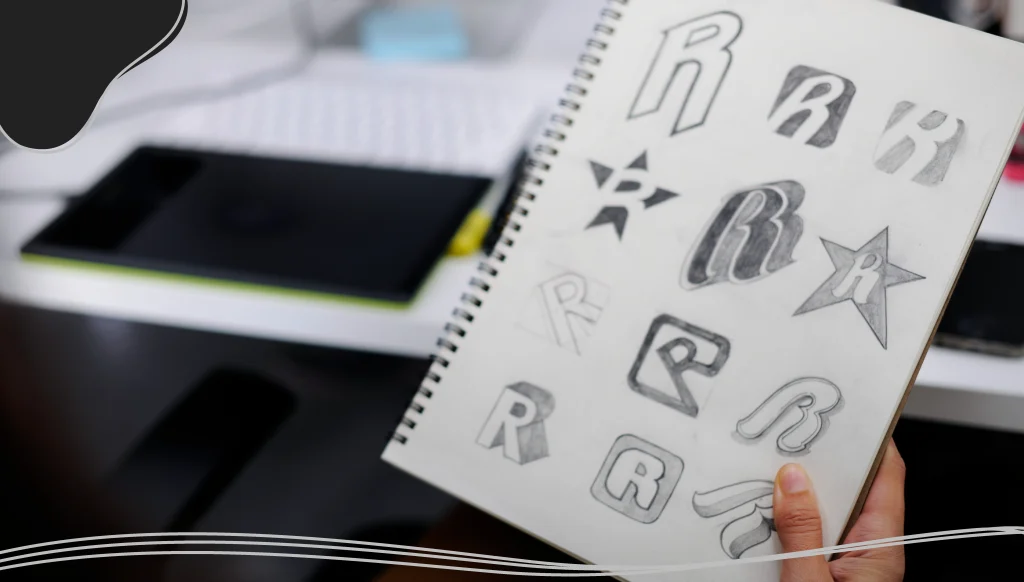
The designer (or team) generates several rough logo concepts, variations, and direction explorations, often by hand or in very rough digital form.
It could be dozens of sketches; some ideas might get discarded early.
Design & Refinement
The designer will then take the best ideas and convert them to digital form using design software like Adobe Illustrator (or equivalent). Develop color palette, typography, shape, etc.
The top options (often 2-5) will then be presented to the client.
Feedback & Revisions
This is where you can tell the designer what you think about the designs. You provide feedback on what you like and what you don’t. The designer refines the selected concepts.
This can include adjusting layouts, color choices, typography, spacing, and other elements.
It’s important to discuss the number of revisional rounds with your designer or agency beforehand. Often, a designer will offer a set number of revisions with the option for additional revisions at a greater cost.
Finalization & Delivery
The final logo is selected and final tweaks applied.
The designer will prepare and deliver the following deliverables: vector files (AI, EPS, SVG), raster files (PNG, JPG, and sometimes PDF), color codes, and possibly a brand style guide (including fonts, color usage, spacing, background contrast, etc.). Additionally, variants for light/dark modes, as well as simplified versions, may be included.
Support & Implementation
Possible minor tweaks or adjustments after delivery. Designers should clarify ownership and usage rights.
You begin using the logo on marketing materials: website, business cards, signage, and merch, so there may be additional design tasks related to application.

Why a Well-Designed Logo is Worth the Investment
A generic logo might get you by, but a memorable logo adds long-term value to your business. It’s not just about looks, it’s about creating trust, recognition, and a cohesive visual identity that connects with your audience.
Think of your logo as the face of your business. A well-crafted logo tells your story, reflects your values, and sets you apart in a crowded market.
What Makes a Logo “Professional” & Worth Higher Prices
If you’re paying more than just for a template, what do you get in return?
What distinguishes a generic logo from a professionally designed, memorable, or distinctive logo? And why do experienced designers or design agencies charge more?
Here are the elements and deliverables that tend to come with higher-quality, professionally designed logos:
Discovery & Brand Strategy
Before a sketch is drawn, there’s usually some work to be done to understand your business: what your brand stands for, who your target audience is, what competitors are doing, and what you like versus what you don’t like. This allows the designer to create something that’s not just pretty, but meaningful.
Research & Inspiration Phase
Looking at market research, trends in your industry, what visually resonates, what colors/typography are expected, and what you can do to stand out. A seasoned designer may dig into business data and external environment (what works, what doesn’t) to inform visual identity.
Concept Generation & Iteration
Sketching multiple logo concepts (sometimes dozens), trying different directions, then refining. It’s rare that the first concept is perfect. Good designers show you several options, each with a rationale behind it. You give feedback, refine, and select one or more to polish.
Custom Fonts & Typography
Using custom or modified fonts gives uniqueness. Even selecting just the right font (or pairing fonts correctly) requires skill. Sometimes logos need hand-drawn lettering.

How to Decide What’s Right for Your Logo Project
Since there are numerous options and trade-offs when it comes to logo pricing, here are some tips to help you determine which route makes sense for your brand, budget, and goals.
1. Clarify Your Goals & Priorities
What matters more: speed? Cost? Uniqueness? Long-term brand identity? Do you need something just for web and social media, or do you also need printed materials, merchandise, or physical signage? The more you define this, the easier it is to choose a matching pricing option.
2. Set Your Budget
Don’t just pick the lowest cost. Set what you can afford, and leave some room. Unexpected costs often happen: more revision rounds; needing more file types; wanting additional variations; needing usage rights; etc.
3. Prepare a Good Design Brief
Whether you work with a freelance designer, agency, or run a logo contest, a clear brief helps reduce unnecessary work, reduces revisions, improves results, and can save you money.
Include your brand values, target audience, competitors, what you like/dislike visually, and any other information you think will be valuable to the logo designer.
4. Look at Portfolios & Past Work
Don’t pick solely on price. Look at what the designer or agency has done before. Does it feel like their style could align with what you want?
An experienced designer with a strong portfolio tends to produce more reliable results (though price will reflect that).
5. Think Long-term
A logo is part of your brand’s journey. If you’re likely to expand, investing more up front often saves cost (and headaches) later. A cheap logo that needs to be redone soon can cost more in the long run.
6. Establish Deliverables Upfront
Clarify what file formats you’ll get, who owns the final logo, whether you have commercial rights, and whether you can trademark.
Make sure deliverables include vector files, color variants, etc. Without those, you may need to pay again later.
7. Allocate Time to Avoid Rush Fees
If you can plan ahead, you’ll likely get a better rate. Rushed jobs often cost more and might force the designer to shortcut some steps, which can hurt quality.
8. Don’t Undervalue the Design Process
Sometimes people think paying for strategy or sketches is “wasteful” if they only want a logo. But those early steps often produce better outcomes: a more distinctive logo, less wasted effort, smoother revisions, better alignment with the brand.
They add cost, but often add value.
Tips to Get the Best Value Without Overpaying
You don’t always need the most expensive logo design to get a professional, memorable, effective logo.
Here are some tips to get good value:
- Be very clear in your brief: The more information you give about your branding goals, audience, and competitors, the fewer wasted revisions you’ll have.
- Prioritize the must-haves: Decide in advance what parts are non-negotiable. If something is less important, maybe you can leave it out or do it later.
- Don’t skip revisions or feedback: Feedback is part of the design process. If you try to “save” by cutting down on revisions, you might end up with something that misses your vision. But also be realistic: unlimited revisions can lead to creeping costs.

Common Misconceptions About Logo Cost
Since there are many options and surprises with logo pricing, here are things people often misunderstand:
- “More expensive always means better.” Not always. Sometimes designers charge a lot just because they have big portfolios or reputations, but the style or process might not match your brand. What matters is what you get, not just the price tag.
- “All file formats are the same.” They’re not. If you only get raster (PNG/JPG) without vector, your logo might look bad when scaled.
- “I only need one version; I can adapt it later.” It’s possible, but adapting a logo for fluid formats (print, merchandise, signage) without the right files or variations can get expensive and time-consuming.
Conclusion
There is no single number that can cover all logo costs in 2025. It depends heavily on what you want, how complex things are, who’s doing the work, and how much uniqueness, polish, and strategy you want in your brand identity.
Think of your logo not as an expense, but as an investment: the face of your visual identity, something that appears in marketing materials, signage, packaging, and digital presence. If done well, it pays off in impressions, recognizability, trust, and differentiation. If done poorly or too cheaply, you might regret having to redo or repair brand perception later.
With that being said, higher logo design prices don’t necessarily equate to higher quality logos. With powerful online logo design tools like LogoMaker, you can create stunning professional-style logos at a fraction of the price. Dodge unwanted logo costs and get started today!
FREQUENTLY ASKED QUESTIONS
What is the average logo design cost in 2025?
The average logo design cost in 2025 ranges from $300 to $3,000 when hiring a freelance logo designer. However, costs can go lower with DIY logo makers or much higher with design agencies.
Why do some logos cost so much?
High design cost usually comes from a deeper creative process, custom work, and professional expertise. Agencies also factor in market research, business data, and the creation of marketing materials.
Can I get a professional logo on a small budget?
Yes! Many small business owners work with freelance designers or launch logo contests to get a professionally designed logo without breaking the bank.
How do I know if my logo is well-designed?
A well-designed logo is simple, memorable, versatile, and aligned with your brand’s journey. If it looks good in black and white, works at any size, and resonates with your target audience, you’re on the right track.
What files should I get with my final logo?
Most professional designers deliver a package that includes vector files (AI, EPS), raster files (PNG, JPG), and sometimes a brand style guide. These ensure your logo is ready for web, print, and future marketing materials.
Is value-based pricing common in logo design?
Yes, especially among experienced designers and agencies. Instead of charging just for time, they consider how much value the logo adds to your business.